
Margin in Forex Trading: A Simple Guide for Nigerian Traders
📈 Learn how margin works in forex trading, its link to leverage, risks, and tips to manage it well for safer trading in Nigeria's markets.
Edited By
Oliver Bennett
Margin in forex trading is the amount of money a trader must put down to open a position on the currency market. Think of it as a security deposit — it’s not the full price of the trade, but a percentage that allows you to control larger amounts of foreign exchange with less cash upfront.
For example, if the margin requirement is set at 1%, to trade a position worth ₦1,000,000, you only need to have ₦10,000 in your trading account. This system enables traders in Nigeria to access forex markets without needing huge capital, but it also means a small movement in price can lead to profits or losses that far exceed your initial margin.
Margin is tied closely to leverage. If your broker offers 100:1 leverage, you can control ₦100 for every naira in margin. While leverage can boost gains, it also magnifies risks. Without proper management, a trader can quickly exhaust their margin and receive a margin call, requiring them to add funds or close positions.
Margin keeps the market fair by ensuring everyone has 'skin in the game'. It protects both the trader and the broker from potential default.
In Nigeria’s forex scene, considering margin is vital because of local factors like naira volatility and fluctuating financial conditions. Margin requirements help prevent reckless trading habits, especially when the market gets jittery during events like the ember months or economic policy shifts.
Knowing your margin requirements lets you plan your trades carefully, avoid unwanted liquidations, and handle your capital wisely. It’s the difference between riding the forex waves steadily and getting tossed around by sudden price shifts.
Margin is a part of your trading capital held by brokers as security.
It does not cost you but restricts how large your open positions can be.
Margin requirements vary among brokers and instruments; always check before trading.
Falling below the margin level triggers a margin call – a prompt to add funds or reduce positions.
Understanding margin is the first step for any serious forex trader in Nigeria. It’s your foundation to trade efficiently, protect your investments, and make the most of forex opportunities north and south of the Sahara.
Margin in forex trading is fundamental because it allows traders to open positions without paying the full contract value upfront. Think of margin as a security deposit held by the broker to ensure you can cover potential losses. This deposit protects the broker and keeps the trading system running smoothly.
Margin serves as collateral that backs your open trades. It is not the cost of the trade but a fraction of the total value. For example, if you want to control $100,000 of currency but your broker requires 1% margin, you’d only need to deposit $1,000. This approach lets you trade larger amounts using relatively small capital, but you must maintain your margin because if your losses grow, the broker may require extra funds or close your positions.
Margin and leverage are related but distinct concepts. Margin refers to the actual amount of money you put down as a security deposit. Leverage, on the other hand, is the multiple of your deposited funds that you can trade with. For instance, a 1% margin corresponds to 100:1 leverage, meaning you control ₦100 for every ₦1 of margin. Leverage amplifies both gains and losses, so understanding their interplay is critical for managing risk in forex trading.
When you open a position, your broker sets aside your margin from your trading account. You must maintain this margin level to keep the trade active. If your losses reduce your account equity below the required margin, you may face a margin call. In Nigeria’s forex market, with fluctuating naira exchange rates and occasional volatility, keeping a close eye on margin levels is particularly important to avoid unexpected liquidation.
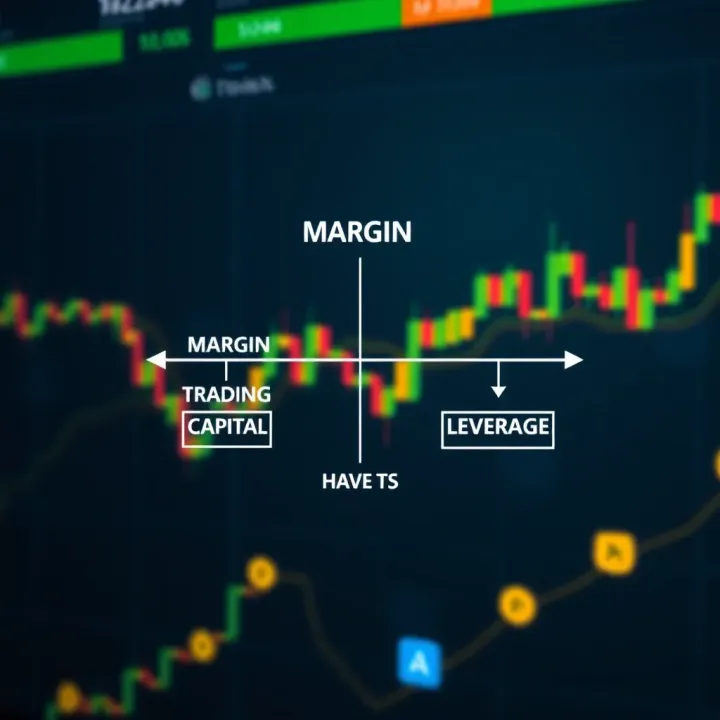
Suppose you want to buy 1 standard lot of EUR/USD, which is 100,000 euros. If the broker asks for 2% margin, you’d need to put down 2,000 euros as margin. Assuming the current exchange rate is 1.10 USD/EUR, this margin equals $2,200. If your account balance cannot cover this margin, you won’t be able to open the position. This clear calculation helps Nigerian traders plan their capital and avoid overexposure.
Keeping margin requirements in mind helps you to stay in the game without sudden shutdowns or forced position closures.
Trade smart by understanding the margin rules your broker applies, and always monitor your available equity. That way, you can trade with confidence and protect your funds against sudden shocks in the forex market.
Leverage plays a major role in forex trading by letting you control larger trade sizes with a smaller amount of capital. In Nigeria, many traders use leverage to maximise their market exposure without needing the full value of the position. However, leveraging amplifies both profits and losses, so understanding how it works alongside margin is critical.
Leverage ratios represent how many times your margin is multiplied to determine your trading power. Common leverage in Nigerian forex trading ranges from 1:50 up to 1:400. For example, a 1:100 leverage means ₦1,000 of your own money can control a position worth ₦100,000.
This setup suits different traders: beginners might start with lower leverage to limit risk, while experienced traders may opt for higher ratios to increase potential gains. Local brokers often allow adjustments to suit your trading style and risk appetite.
The relationship between leverage and margin is straightforward: margin is the broker’s deposit requirement, and leverage is essentially the multiple of that deposit controlling your trade size. If you have a 1:200 leverage, the margin needed is just 0.5% of the trade volume. This means the more leverage you use, the smaller your margin requirement becomes, allowing you to open bigger trades with less capital.
Leverage magnifies both your gains and losses. Suppose you open a ₦100,000 position with ₦1,000 margin at 1:100 leverage. A 1% price move in your favour yields a ₦1,000 profit—doubling your initial margin. But the reverse is also true: a 1% adverse move wipes out your margin entirely.
While this potential for quick profit is attractive, it increases the risk of severe losses. Nigerian traders especially should be cautious, as naira volatility and market unpredictability can hit leveraged positions hard. The key is not to chase big leverage blindly but to use it wisely alongside sound risk controls.
Proper risk management involves setting stop-loss orders and limiting the size of each trade relative to your account balance. Don’t put more than 1–2% of your total trading capital at risk on a single position. Brokers offering educational tools and demo accounts can help you practice leverage use without losing real money upfront.
Using leverage responsibly means understanding how much margin you commit and where your risk tolerance lies. It’s easy to get drawn into bigger trades, but maintaining careful limits ensures you don’t suffer unnecessary blowouts.
Ultimately, leverage gives you extra buying power in forex trading, but it requires a disciplined approach to protect your capital and stay profitable in the long run.
The concepts of margin calls and stop out levels are key safety nets in forex trading, especially in volatile markets like Nigeria's. They help protect both traders and brokers from incurring excessive losses. Understanding when these events occur and how to respond can keep your trading journey steady and prevent unexpected account closures.
A margin call happens when your margin level—the ratio of equity to used margin—falls below a broker’s specified threshold, often set at about 100% or lower. At this point, it signals that the funds in your account aren’t enough to cover potential losses on your open positions. For example, if your equity in your forex trading account drops to ₦20,000 but your used margin for open trades is ₦25,000, your margin level falls below 100%, which might trigger a margin call from your broker.
Stop out levels occur when the margin level declines even further, sometimes around 50% or 30%, depending on the broker. At stop out, the broker automatically closes some or all your open positions to stop further losses. This action prevents your account from slipping into a negative balance, a significant risk in highly leveraged trades.
Brokers act as intermediaries ensuring traders maintain sufficient capital to cover their open positions. When your margin level dips into danger zones, the broker alerts you with a margin call, typically through email, SMS, or platform notifications. This notification is their way of giving you a chance to add funds or reduce exposure before stop out happens.
Moreover, brokers have their own margin call and stop out policies set in their trading agreements, which can vary. Some Nigerian brokers may have tighter thresholds due to heightened market volatility or local regulatory guidelines. It’s your responsibility to know these terms clearly before starting to trade.
When you get a margin call, the quickest way to avoid forced closures is to top up your trading account. Adding funds increases your equity, raising your margin level back above the critical threshold. For instance, if your account is hit by a margin call during a volatile period like ember months when forex rates can swing sharply, injecting ₦50,000 can provide a buffer.
This option keeps your positions open and prevents an immediate stop out, giving your trades time to recover if the market moves in your favour. That said, only deposit extra money if you fully understand the risks and can afford further exposure.
Another way to manage margin calls is by actively closing some open trades or adjusting your positions. Reducing your exposure lowers the margin required to keep those trades open. For example, you might close a losing position on EUR/USD to free margin and prevent a stop out.
Alternatively, adjusting stop-loss levels or hedging positions can help manage risk and control potential loss sizes. This approach is especially practical when additional deposits aren’t possible or you want to limit risk amid uncertain market conditions.
Preventing margin calls and stop outs is less about luck and more about good preparation and understanding your broker’s rules. Always keep an eye on your margin levels and act fast to maintain control over your trading account.
By knowing what triggers margin calls and stop outs, plus how to respond effectively, Nigerian forex traders can avoid costly surprises and keep their trading in check.
Managing margin effectively is a key skill for anyone serious about forex trading in Nigeria. Without careful margin management, traders risk losing more than their initial investment due to the high volatility and leverage involved. Practical best practices not only protect your capital but also help to maximise potential profits by keeping losses within controllable limits. For Nigerian traders, specific market conditions—such as naira fluctuations and broker regulations—make these practices particularly relevant.
Selecting a broker safeguards your funds and shapes your trading experience. Focus on brokers regulated by credible authorities like the Securities and Exchange Commission (SEC) Nigeria or recognised international bodies. Such regulation assures you of a certain level of transparency and fund safety. For instance, with some unregulated brokers, you risk delayed withdrawals or unfair margin calls, especially when naira weakness spikes market risks.
Beyond regulation, assess the account types offered. Brokers usually provide various leverage and margin options suited to different trader profiles—from beginner to advanced. For example, one broker might offer leverage up to 1:200, while another cap it at 1:50. Nigerian traders should weigh how much leverage they are comfortable using because higher leverage increases both gain potential and risks. Choosing an account with flexible margin requirements helps tailor your exposure to current market volatility.
Setting stop-loss and take-profit levels is a straightforward way to protect your funds when trading with margin. Stop-loss orders close a position automatically once losses hit a preset amount, while take-profit locks in gains without you having to monitor the market constantly. For instance, if you buy USD/NGN at ₦460 and set a stop-loss at ₦455, you limit your loss to ₦5 per dollar, avoiding margin calls that might otherwise wipe your investment.
Calculating proper position sizes is another crucial step. Never risk more than a small percentage of your trading capital on a single trade—typically 1–2%. Using position size calculators can help translate your risk tolerance into concrete lot sizes. For example, if your trading capital is ₦100,000 and you set a 2% risk, do not open positions where losses could exceed ₦2,000, even if the margin required is less. This approach keeps your account stable despite occasional losses.
Most modern trading platforms used in Nigeria, like MetaTrader 4/5 or proprietary apps from OPay Markets or GTBank Securities, come with built-in margin calculators. These tools display exactly how much margin your open positions consume, helping avoid surprise margin calls. If you open a position on EUR/USD leveraging 1:100, the calculator shows how much of your available funds lock up as margin, allowing you to manage multiple trades without overexposure.
Besides calculators, consider setting alerts and notifications on your trading platform or mobile app. These alerts can warn you when your margin level drops below a certain percentage, prompting you to either add funds or close positions before a stop out. For Nigerian traders who often face disruptions like power outages or unstable internet, having timely alerts is vital to staying in control and reducing costly errors.
Keeping a close eye on margin through the right brokers, smart risk strategies, and handy tools gives Nigerian forex traders a solid edge in navigating the market safely and profitably.
📈 Learn how margin works in forex trading, its link to leverage, risks, and tips to manage it well for safer trading in Nigeria's markets.
📈 Learn forex trading basics, smart strategies & risk management tailored for Nigerians. Navigate local platforms, market challenges, and grow your ₦ safely today!
📈 Learn practical steps for online forex trading in Nigeria, navigate naira volatility, pick the right brokers, and use fintech platforms to trade confidently. 💹

Learn how to trade forex on Deriv using practical tips, strategies, and local guidance for Nigerian investors. Manage risks, understand trading instruments, and start with confidence 💹🇳🇬
Based on 9 reviews