
Margin in Forex Trading: A Simple Guide for Nigerian Traders
📈 Learn how margin works in forex trading, its link to leverage, risks, and tips to manage it well for safer trading in Nigeria's markets.
Edited By
Emily Parker
Forex trading has grown rapidly among Nigerian investors and traders eager to tap into global currency markets. Understanding its basics and challenges tailored to Nigeria’s unique economic conditions is essential before diving in.
Forex stands for foreign exchange, where currencies like the US dollar, euro, British pound, and Nigerian naira are bought and sold in pairs. Prices fluctuate continuously, offering opportunities to profit from changes in exchange rates. For example, if you anticipate that the dollar will strengthen against the naira, you might buy USD/NGN, hoping to sell later at a higher rate.
Among Nigerians, forex trading appeals because it allows starting capital to be relatively low while offering access to a global market. Popular platforms like MetaTrader 4 (MT4), MetaTrader 5 (MT5), and newer local fintech apps provide easy access to trades anywhere with internet connectivity.
That said, forex trading is not a shortcut to quick riches. The market is highly volatile and influenced by factors such as Nigeria's foreign exchange policies, CBN intervention, and global events impacting oil prices, which have direct effects on the naira’s stability. For instance, sudden changes in CBN's FX restrictions can cause steep swings in the currency pair prices.
Effective forex trading in Nigeria requires a solid understanding of local financial dynamics and disciplined risk management.
To get started, Nigerian traders should consider the following:
Choose regulated brokers: Look for brokers licensed by credible authorities to safeguard your funds.
Master fundamental and technical analysis: Understand economic indicators and chart patterns influencing forex prices.
Practice with demo accounts: Gain experience without risking real money.
Be mindful of leverage: Excessive leverage increases risk of losing more than initial capital.
With steady learning and adherence to practical strategies that respect Nigeria’s market peculiarities, forex trading can be a viable income source or investment tool. This guide will walk you through key concepts, effective strategies, and risk controls relevant specifically to Nigerian traders.
Grasping how the forex market operates is vital for any Nigerian trader aiming to make smart moves and avoid unnecessary losses. Forex, short for foreign exchange, is simply the global marketplace for trading currencies—a market where your decision today could influence your financial progress tomorrow. Understanding its mechanics means you can better read market signals, identify good entry and exit points, and protect your investment.
Definition and basics: Forex trading involves buying one currency while simultaneously selling another. The goal is to profit from the fluctuations in their exchange rates. For example, if you believe the US dollar (USD) will strengthen against the Nigerian naira (₦), you might buy USD/NGN, expecting to sell it later at a higher rate. This market is the largest in the world, moving over $6 trillion daily, making it highly liquid and active.
Major currency pairs and their significance: Currency pairs are quoted as two currencies put together, such as EUR/USD or GBP/USD. The most traded pairs are known as "majors," involving currencies from world's largest economies: the US dollar, euro, British pound, Japanese yen, and Swiss franc. These pairs typically offer tighter spreads and more stable price movements, which is beneficial for traders. For Nigerians, the USD/NGN pair draws notable attention due to economic ties and remittance flows.
How forex differs from other markets: Unlike stocks or commodities, forex has no central exchange, and it operates 24 hours through a network of banks, brokers, and traders worldwide. The market responds directly to economic news, political events, and central bank policies, often triggering swift currency swings. This constant movement offers opportunities but demands sharp attention, unlike stock markets that close outside business hours.
Market hours and participants: The forex market is open 24 hours from Sunday evening to Friday evening (West Africa Time), spanning major trading centres like London, New York, Tokyo, and Sydney. Nigerian traders can tap into these active periods to trade when markets are most liquid. Key players include central and commercial banks, hedge funds, multinational corporations, brokers, and retail traders like you.
Role of banks, brokers, and retail traders: Banks and financial institutions dominate forex trading, dealing in huge volumes and influencing exchange rates. Brokers act as intermediaries offering access to the market via trading platforms. Retail traders in Nigeria typically work through brokers like IG, XM, or local options regulation-compliant to execute trades with smaller amounts. Understanding who controls liquidity and pricing helps you choose trustworthy brokers and plan strategies.
Understanding spreads, pips, and leverage: A 'pip' measures the smallest price movement in a currency pair, crucial for calculating profits or losses. The 'spread' is the difference between buying (ask) and selling (bid) price; tighter spreads mean you start your trade closer to profitability. Leverage allows you to control a larger position than your actual capital, for example, 1:100 leverage means ₦1,000 controls ₦100,000 worth of currency. While leverage magnifies gains, it can also amplify losses, so using it wisely is key for risk management.
Mastering these basics about how forex works will put you ahead, helping you spot genuine opportunities and steer clear of common pitfalls in a volatile market.
Starting forex trading in Nigeria presents both exciting opportunities and unique challenges. Understanding the local trading environment is vital before stepping into this global market. With the naira’s volatility and Nigeria’s distinctive regulatory framework, choosing your broker and trading tools wisely can mean the difference between profit and loss.
Trading with a broker licensed by credible authorities ensures your money is safer and trading conditions meet minimum standards. For Nigerian traders, it’s best to look for brokers regulated by top-tier global bodies such as the Financial Conduct Authority (FCA), Cyprus Securities and Exchange Commission (CySEC), or Securities and Exchange Commission Nigeria (SEC). This reduces the chance of scams, which have unfortunately been common in the local market.
A broker’s regulation status affects withdrawal speed, platform reliability, and dispute resolution options. For example, brokers regulated by SEC Nigeria must comply with rules tailored to Nigerian traders, including how funds are held and transactions processed. In contrast, unregulated brokers often delay withdrawals or manipulate prices.

Nigerian traders commonly use brokers like FXTM, OctaFX, and HotForex. These brands offer user-friendly platforms, local payment options, and support in Nigerian Naira. They also align with local regulations or have robust global licences offering confidence to traders.
Choosing a broker that accommodates Naira deposits through platforms like OPay or local banks eases funding and avoids excessive currency conversion costs. This matters because foreign exchange fees eat into your initial capital, especially if your minimum deposit is low.
Many brokers offer various account types to suit different experience levels and investment sizes. For example, micro or standard accounts may start with as low as ₦10,000, allowing new traders to enter the market without risking large sums.
Account types differ in leverage, spreads, and commission structures. Beginners should prioritise brokers with flexible leverage options and transparent fees to control risk. Larger accounts often get tighter spreads but require more capital. Understanding these factors helps you pick an account that aligns with your trading goals and risk appetite.
The choice of trading platform greatly influences your experience. MetaTrader 4 (MT4) and MetaTrader 5 (MT5) are favourites among Nigerian traders due to their reliability, wide indicator selection, and automated trading support. cTrader is another popular option offering advanced charting and level II pricing.
Platforms like MT4 are also well supported by Nigerian brokers, ensuring faster execution and easier integration with local payment systems. These platforms provide tools necessary for technical analysis, order management, and custom strategies, making them an essential part of your trading setup.
Mobile trading apps provide flexibility, allowing you to monitor and place trades on the move, which is handy in busy Nigerian cities where traffic and power outages disrupt work.
However, desktop platforms remain preferable when analysing complex charts and running multiple indicators simultaneously. Beginners could start on mobile for convenience but should gradually move to desktop for better control and detailed research.
Successful forex trading depends on timely information. Most brokers supply real-time price feeds and news updates within their platforms, but supplementing this with dedicated economic calendars and news portals sharpens decision-making.
For Nigerian traders, using platforms that aggregate global market data plus local economic developments — such as CBN policy changes or NSE movements — provides an edge. Tools like TradingView or investing apps supporting Nigerian market data add value beyond basic broker platforms.
Selecting the right broker and tools tailored to Nigeria’s market realities lays a strong foundation for your forex trading journey. Always prioritise security, ease of funding, and accessibility to reliable data as you start trading.
Having solid strategies is the backbone of any successful forex trader, especially in Nigeria’s dynamic market. With constant fluctuations in global currencies and local economic factors, relying on guesswork or hunches can quickly drain your capital. Effective strategies blend analysis, practical tools, and discipline to help you make informed decisions. This section breaks down the two main approaches—technical and fundamental analysis—giving you clear insights to trade smarter and shield your investment.
Reading charts and candlestick patterns is the starting point for many traders. Charts paint a picture of past price movements, showing you trends and reversals. Candlestick patterns, such as the hammer or engulfing candle, signal potential turning points in the market. For example, when trading the USD/NGN pair, spotting a bullish engulfing pattern after a downtrend might hint at a price rise ahead. Being familiar with such patterns helps you anticipate moves rather than react too late.
Common indicators: moving averages, RSI, MACD provide extra clues. Moving averages smooth out price data to highlight the trend direction, making it easier to spot whether a currency is generally going up or down. The Relative Strength Index (RSI) measures momentum, telling you if a currency is overbought or oversold. Meanwhile, the MACD (Moving Average Convergence Divergence) tracks trend changes and strength. Nigerian traders often combine these tools to avoid false signals, such as waiting for both RSI to exit oversold territory and MACD crossover before entering a trade.
Using trendlines and support/resistance helps sharpen entry and exit points. Trendlines connect price lows or highs to visualise the market’s direction. Support and resistance levels mark price zones where currencies have historically bounced or struggled to break. If, say, the EUR/USD consistently hits resistance near 1.1000 and reverses, placing a sell order around that level can be smart. These lines act like invisible barriers, guiding your trades and limiting surprises.
Economic indicators affecting currencies include data like inflation rates, unemployment figures, and GDP growth. These numbers give traders insight into a country’s economic health, influencing demand for its currency. For instance, if Nigeria’s inflation rate spikes, the naira may weaken against the dollar, affecting the NGN/USD exchange rate. Traders track these releases to position themselves ahead of market moves.
Impact of central bank decisions and interest rates is a big deal in forex. When the Central Bank of Nigeria (CBN) adjusts interest rates, it affects currency attractiveness. Higher rates usually boost a currency’s value as investors seek better returns. For example, during periods when the CBN raised the monetary policy rate to combat inflation, the naira sometimes gained strength temporarily. Conversely, unexpected rate cuts or dovish statements often lead to sell-offs.
Nigeria-specific factors influencing forex must not be overlooked. Apart from global forces, local politics, oil prices, and FX supply restrictions shape the forex scene here. The naira’s value is closely tied to oil export revenues, so any shock in crude prices can ripple into forex volatility. Plus, restrictions on foreign currency access and informal forex markets complicate trading decisions. Understanding these nuances helps traders plan realistically and avoid common pitfalls.
Successful forex trading in Nigeria depends on blending both technical and fundamental strategies to navigate a complex market. Knowing when to trust charts and when to heed economic news can be the difference between profit and loss.
By mastering these approaches, you gain a practical edge over traders who act on impulse or incomplete information. Your trading journey becomes less about luck and more about informed action.
In forex trading, managing risk is not just advisable — it's necessary for survival. The volatile nature of currency markets means that even experienced traders face losses when they neglect proper risk management. Protecting your investment involves strategies that help you cut losses early, lock in profits, and avoid catastrophic setbacks. For Nigerian traders, dealing with factors like naira volatility and market unpredictability makes risk management even more critical.
Setting stop-loss and take-profit orders helps safeguard your trades from unexpected market swings. A stop-loss order automatically closes your position when the price reaches a level you set, limiting potential losses. This is vital because currency pairs can fluctuate rapidly, especially when affected by global events or economic data releases. Conversely, take-profit orders secure profits by closing a trade once it hits your target price. For instance, if you buy USD/NGN at ₦460 and want to limit losses to ₦10, setting a stop-loss at ₦450 ensures you don’t lose more than that amount.
Position sizing and leverage control determine how much money you put into each trade relative to your overall account size. It's tempting to use high leverage to boost gains, but that also magnifies losses and can wipe out capital quickly. Nigerian brokers often offer leverage ratios up to 1:100, but a disciplined trader limits this to more manageable levels like 1:10 or 1:20. Correct position sizing means never risking more than a small percentage (commonly 1-2%) of your trading capital on a single trade. For example, if your account has ₦500,000, risking ₦5,000 per trade prevents significant damage if the market moves against you.
Avoiding common trader mistakes involves steering clear of emotional decisions, revenge trading, or overtrading. Many beginners lose funds by chasing losses or doubling down on failing positions. Patience and adherence to your strategy help reduce impulsive trades. Also, relying solely on tips without analysis often ends badly. Nigerian traders should watch out for such pitfalls and maintain logs to review past trades, identifying errors to improve continuously.
Handling market swings and news surprises means understanding that forex markets respond sharply to events such as CBN policy changes, economic releases, or geopolitical tensions. These can cause sudden price jumps or drops. One practical approach is using pending orders during high-impact news to avoid entering trades at unfavourable prices. Also, diversifying your trades across currency pairs can reduce exposure to a single market shock.
Psychology of trading: patience and discipline are often undervalued but form the backbone of consistent profits. Trading requires waiting for clear setups rather than forcing the market, no matter how tempting quick returns are. Emotional control prevents panic selling or buying driven by hearsay, which commonly leads to losses. For example, during ember months when markets can be jittery, sticking to your plan rather than reacting hastily preserves capital.
Strategies for consistent trading call for developing a routine: setting trading hours, reviewing daily charts, and keeping an eye on economic calendars relevant to Nigerian and global events. Regularly updating your strategy based on performance and market changes helps build long-term success. Consistency beats chasing unpredictable short-term gains, especially in environments like Nigeria's, where both currency fluctuations and broker practices vary.
Remember, in forex trading, preserving your investment is more important than making quick profits. Protecting your capital today allows you to stay in the game to profit tomorrow.
Navigating Nigeria's forex trading environment is vital for any trader aiming to succeed in the local market. The landscape is shaped by regulatory frameworks, funding options, and currency exchange dynamics, all of which directly impact trading efficiency and safety. Understanding these elements helps traders protect their capital and comply with legal standards, which is especially critical given Nigeria’s unique economic conditions.
Nigeria’s financial markets, including forex trading, operate under the oversight of two primary bodies: the Securities and Exchange Commission (SEC) Nigeria and the Central Bank of Nigeria (CBN). SEC Nigeria regulates securities trading and ensures brokers and trading firms meet minimum standards. Meanwhile, CBN focuses on monetary policy and foreign exchange controls. Both agencies have set guidelines to curb illegal trading and protect investors, so Nigerian traders must ensure their brokerages conform to these rules.
Trading with entities regulated by SEC or approved by CBN offers significant protection. For example, regulated brokers must keep client funds separate from their operating accounts, reducing risk if the broker faces financial difficulties. They also adhere to transparency standards, giving traders confidence in pricing and trade executions. Non-regulated platforms often operate outside legal frameworks and may leave traders vulnerable to unfair practices or outright scams.
Forex scams remain a real threat in Nigeria. Fraudsters often promise unrealistic returns or use aggressive sales pitches to lure unsuspecting traders. To avoid falling prey, it is crucial to verify broker licences via SEC or CBN records and avoid firms that do not provide full company details or regulatory compliance proof. Additionally, always question requests for unusual payments or personal data. Awareness and vigilance are your best shields against these schemes.
Funding your forex account is straightforward but requires care. Popular funding methods among Nigerian traders include bank transfers, debit cards, and increasingly, mobile money services. Using local bank transfers ensures relatively quick deposits, but traders should consider charges and processing times. Mobile wallets and fintech platforms offer an alternative with convenient instant deposits.
Exchange rate fluctuations and foreign exchange restrictions are important considerations. Since many brokers deal in USD or EUR, converting Naira to foreign currency can affect your trading capital. Restrictions imposed by CBN can also limit the free flow of foreign exchange, potentially delaying withdrawals or conversions. Monitoring exchange rates closely and planning transactions during favourable times can safeguard liquidity.
Platforms like OPay and Paystack have become popular payment gateways for Nigerian traders due to their integration with local banks and ease of use. These services simplify deposits and withdrawals by enabling seamless conversions and quick transfers. They support multiple funding options, allowing traders to top up accounts directly from their mobile devices or bank apps. Using trusted platforms reduces the risk of payment delays or lost funds, which is crucial for smooth trading operations.
Always verify the compliance and security standards of your funding channels to protect your investment and avoid unnecessary delays.
Navigating the regulatory and funding environment with care enhances your forex trading experience in Nigeria by reducing risk and ensuring better control over your funds.
📈 Learn how margin works in forex trading, its link to leverage, risks, and tips to manage it well for safer trading in Nigeria's markets.
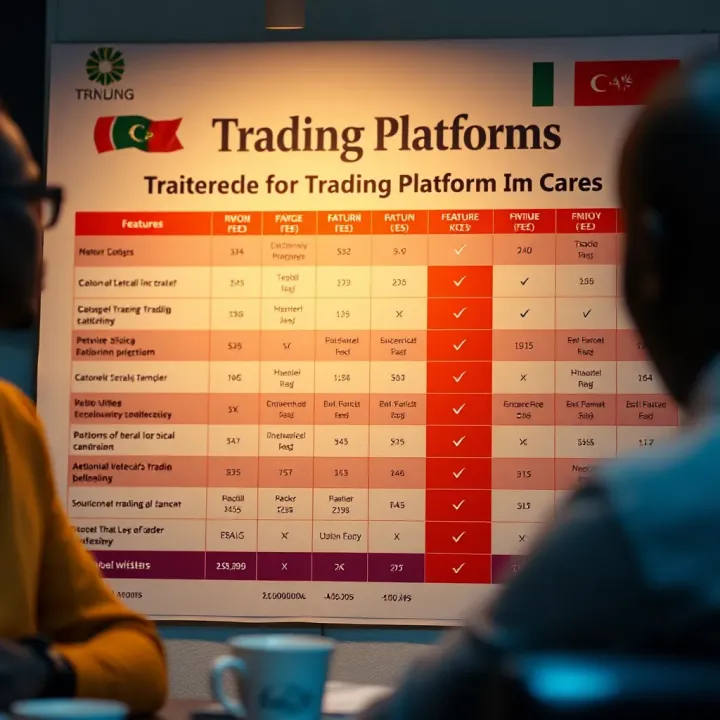
Find the perfect trading platform in Nigeria 🇳🇬. Compare fees, security, and support to trade confidently, whether you're a beginner or pro 📊💼.
Looking for the best forex broker in Nigeria? Discover how to choose with tips on regulation, fees, platforms, accounts, and support 💹🇳🇬
Explore the benefits of Forex trading in Nigeria 🇳🇬: easy market access, high liquidity, diverse strategies, and potential to grow your investments worldwide 🌍💰.
Based on 13 reviews