
Bitcoin Price Prediction Today for Nigerian Investors
🔍 Stay ahead with today’s Bitcoin price insights for Nigerian investors 🇳🇬. Learn how global shifts and local factors affect ₦ fluctuations & market moves 📈🚦
Edited By
James Pendleton
Predicting Bitcoin prices daily is no small task, especially for Nigerian investors navigating a local market shaped by naira volatility and global crypto trends. Bitcoin’s price doesn't just move on its own; it responds to a mix of factors including international demand, regulatory changes, and market sentiment. Nigerian traders must understand how these elements interplay and what tools can help decode short-term price movements.
Daily Bitcoin price prediction relies heavily on analysing market indicators such as trading volume, price momentum, and recent news. For example, when a major country updates its cryptocurrency laws or a big fintech startup launches crypto services, Bitcoin prices often react swiftly. Nigerian investors keeping track of these local and global events gain an edge in timing their trades.
Price forecasting methods generally fall into two camps: technical analysis and sentiment analysis. Technical analysis uses historical price data and charts to identify patterns. Technical indicators like the Relative Strength Index (RSI) and Moving Averages help predict whether Bitcoin is overbought or undervalued in a given day. Sentiment analysis, on the other hand, monitors online conversations and news coverage to gauge public mood, which can hint at upcoming price shifts.
"Understanding both technical and sentiment factors can turn daily Bitcoin price updates from mere numbers into strategic insights for Nigerian investors."
However, the challenge lies in combining these indicators with Nigeria’s specific market factors. Naira exchange rate fluctuations, intermittent internet access, and restrictions on crypto exchanges can distort price signals. Traders often use mobile apps like Binance, OPay, or local platforms such as Yellow Card to stay updated, but must factor in delays and spreads unique to Nigerian markets.
For practical application, here are ways Nigerian investors can harness daily Bitcoin price predictions effectively:
Monitor global news, especially from the US, China, and Europe, as they heavily influence Bitcoin’s price.
Use technical analysis tools available on trusted platforms but avoid relying solely on a single indicator.
Track naira-to-dollar exchange rate trends since they impact the local cost of Bitcoin.
Read community forums and social media to capture sentiment shifts early.
Having a daily price outlook empowers Nigerian investors to make informed choices, minimise risks, and spot opportunities amid market noise. It’s not about predicting the future perfectly, but using timely knowledge to stay ahead in the fast-paced crypto market.
Grasping how Bitcoin prices move daily is vital for Nigerian investors aiming to make smart decisions. The Bitcoin market operates 24/7, unlike the stock market, which means price shifts can happen anytime. Being aware of what causes these daily movements helps investors react quickly, protect their capital, and spot potential gains.
Bitcoin’s price largely depends on how many people want to buy or sell it at any given time. When demand outweighs supply, prices rise; if supply exceeds demand, prices drop. For instance, during the 2021 crypto rally, Nigerian traders rushed to buy Bitcoin, pushing prices higher despite naira volatility. This simple principle is the backbone of daily price swings.
Announcements by governments or regulatory bodies sharply impact Bitcoin prices. When Nigeria’s Central Bank issues fresh guidelines on cryptocurrency usage, or international news highlights stronger regulation in major markets like the US, traders react. These developments can trigger quick price movements within hours, reflecting uncertainty or optimism.
Changes to Bitcoin’s underlying technology or shifts in network use influence daily prices too. If there’s a security upgrade or increased on-chain activity—like a surge in transactions—investors might see this as a bullish sign. For example, when Bitcoin’s Taproot upgrade rolled out, it boosted confidence in network scalability, affecting daily price trends positively.
Speculators seeking quick profits contribute significantly to daily price volatility. Their rapid buying and selling amplify price swings, sometimes pushing prices away from fundamental values. In Nigeria, where margin trading through platforms is growing, speculative moves by a few large traders can lead to sudden price spikes or drops.
Bitcoin is known for its high volatility. It’s common to see daily price changes of 3–5%, sometimes even more during turbulent periods. This contrasts sharply with traditional assets like stocks or bonds, which usually move less than 1% daily. Investors in Nigeria must factor this wild price range into their strategies to avoid unexpected losses.
For traders focused on daily movements, volatility offers both opportunities and risks. High price swings can yield quick profits if timed well, but they equally increase chances of losses. This makes risk management essential—using stop-loss orders or limiting investment sizes—especially where internet reliability and power supply are inconsistent. Being prepared for volatility helps Nigerian investors avoid emotional decisions amid rapid price changes.
Understanding the forces behind daily Bitcoin price moves equips investors with the knowledge to navigate this fast-paced market confidently. Staying informed on demand trends, regulatory news, tech updates, and speculative dynamics provides the edge needed to make effective daily trading choices.
Predicting Bitcoin's daily price is no walk in the park, especially for Nigerian investors navigating a market affected by local factors such as naira volatility and regulatory shifts. Using precise approaches helps traders and investors make smarter decisions and minimise sudden losses. In this section, we explore technical and fundamental analysis — the two main approaches used to forecast Bitcoin's short-term price moves, focusing on practical tools and their relevance.
Moving averages simplify price data by smoothing out fluctuations to show prevailing trends. For example, a 50-day moving average reveals the average closing price for the past 50 days, helping investors determine the market direction. Trend lines, on the other hand, connect previous highs or lows on a chart to define support and resistance levels. In Nigeria, where market liquidity can be uneven, spotting such trends is valuable for timing trades. Say Bitcoin’s price has bounced three times off a trend line drawn on a daily chart; traders may expect it to act as a support level going forward.
RSI measures how quickly asset prices have changed, signalling potential overbought or oversold conditions. An RSI above 70 often suggests Bitcoin is overbought and could dip, while below 30 might indicate overselling and a possible rally. Momentum indicators like MACD (Moving Average Convergence Divergence) provide insights on price momentum, helping traders confirm trend reversals or continuations. For busy Nigerian investors who want quick cues, RSI and momentum tools offer a straightforward way to evaluate whether it's a good time to buy or sell within the day.
Candlestick charts capture daily price action through patterns showing opening, closing, high, and low prices. Certain formations—like "Doji" or "Hammer"—can forecast trend changes. Volume analysis complements this by revealing how strong the buying or selling pressure is. For instance, a bullish candlestick with high volume could mark the start of an upward push. This combo is especially useful for Nigerian traders who watch exchanges like Binance Nigeria or Luno for intraday moves, enabling them to act when a pattern signals a shift backed by significant trading activity.
News stories and government policies can sway Bitcoin prices within hours. For Nigerian investors, statements from the Central Bank of Nigeria (CBN) about cryptocurrency regulations or warnings can trigger sharp price swings. Keeping track of such updates is crucial. For example, when the CBN signalled restrictions on crypto in early 2021, Bitcoin’s naira price dropped noticeably. A short-term investor needs to quickly assess how news affects market sentiment to avoid losses or seize opportunities.
Beyond price charts, the underlying health of the Bitcoin network influences its price. Metrics like transaction volume, number of active wallets, and hash rate reveal the blockchain’s robustness. Rising transaction activity often points to growing adoption, which can prop prices up. For Nigerian users, increased uptake of Bitcoin for remittances or business payments signal positive fundamentals. Observing these metrics alongside local interest in platforms like Paxful or Yellow Card helps align daily price expectations with real-world usage trends.
These combined approaches give Nigerian investors a fuller picture, blending technical signals with market realities to make more informed daily Bitcoin price forecasts.
Predicting Bitcoin's price on a daily basis involves navigating numerous obstacles that make accuracy difficult even for seasoned analysts. Spotting potential pitfalls helps investors avoid costly mistakes and set realistic expectations. This section explores major challenges shaping the reliability of daily forecasts.
Bitcoin markets remain vulnerable to manipulation largely because of their relative lack of strict regulation compared to traditional financial markets. Whales—individuals or groups controlling large Bitcoin holdings—can sway prices by executing massive buy or sell orders at key moments, creating waves that smaller traders often misinterpret. Such manipulation can lead to sudden price swings, making short-term predictions unreliable.
Insider trading also poses risks, especially when individuals with privileged information about upcoming regulatory moves or major exchange events trade ahead of the broader market. In Nigeria, where regulatory clarity on cryptocurrencies shifts frequently, rumours can trigger abrupt buying or selling. This unpredictability demands caution from investors relying on daily price forecasts.
Bitcoin’s price reacts sharply to unexpected news—from government bans to endorsements by major companies. For instance, when a country announces a ban on crypto trading or when influential figures publicly praise or criticise Bitcoin, the market responds immediately. Daily price predictions struggle to incorporate such events, as they happen without warning.
Take the example of Nigeria’s Central Bank of Nigeria (CBN) policy updates: unexpected tightening or relaxations in rules can cause immediate Naiira depreciation against the dollar and, by extension, affect Bitcoin's local price. Traders who don’t factor sudden news into their strategy risk sizeable losses because such events distort usual market patterns.
Predictive models for Bitcoin prices often fall into the trap of overfitting—where a model too closely fits past data and fails to predict new market behaviour accurately. For example, a model trained on the 2021 bull run might perform poorly during periods of market stagnation or crash, leading to misleading forecasts. This bias limits the model’s adaptability given Bitcoin’s volatile and evolving market.
Over-reliance on technical indicators without considering changing market dynamics or emerging trends can further exacerbate this issue. Investors depending solely on such models may find themselves blindsided when sudden shifts render past patterns irrelevant.
Bitcoin prices are also influenced by factors that no model can reliably forecast. These include geopolitical tensions, regulatory clampdowns, technology failures, or infrastructure challenges such as power outages prevalent in certain Nigerian regions. For example, a prolonged blackout affecting Nigerian crypto exchanges or payment platforms disrupts trading activity unpredictably.
Moreover, market sentiment driven by social media or influential personalities can abruptly change investors' behaviour. Even the best predictive tools cannot fully capture these external shocks, reminding investors to combine technical forecasts with vigilance on broader developments.
Reliable daily Bitcoin price prediction remains challenging because of market manipulations, sudden news shocks, and inherent limits of forecasting models. Nigerian investors should approach these predictions as one of several tools, not crystal balls, incorporating local realities and global influences in their decision-making.
Understanding these challenges sharpens your trading strategy and helps you avoid overconfidence in uncertain markets. It underscores the need for flexible approaches rather than relying on any single model or data source alone.
In Nigeria, applying daily Bitcoin price predictions goes beyond mere speculation; it becomes an essential tool for navigating our unique market challenges. Investors here face additional layers of complexity due to the naira's volatility, regulatory shifts, and infrastructural constraints. Understanding these local factors ensures that price predictions are not just theoretical but practical guides for buying or selling decisions.
The naira's frequent swings significantly affect Bitcoin prices for Nigerian investors. Since most Bitcoin transactions involve converting naira to US dollars or other stable currencies, any instability in exchange rates translates into unpredictable Bitcoin costs. For instance, during periods of naira depreciation, Bitcoin prices often spike in local currency terms, sometimes beyond global market trends. This means investors must track both global Bitcoin movements and local forex rates to get an accurate picture.
Moreover, the difference between official and parallel (black market) exchange rates can create arbitrage opportunities but also risks. Traders who rely only on the official rate may misjudge Bitcoin’s real cost, leading to losses. Hence, daily price predictions must factor in local forex realities to inform timely and profitable trades.
The Central Bank of Nigeria (CBN) plays a key role in shaping Bitcoin’s local market through regulations and policies. For example, the CBN's 2021 directive prohibiting banks from facilitating cryptocurrency transactions sent shockwaves through Nigerian crypto markets, causing sharp price adjustments.
Such regulatory announcements can trigger immediate price swings and affect liquidity. Investors rely on daily prediction tools that integrate news about policy shifts or announcements from financial regulators. Keeping an eye on statements from the CBN, Securities and Exchange Commission (SEC) Nigeria, or other bodies helps Nigerian investors anticipate market reactions and adjust their strategies accordingly.
Nigeria's inconsistent power supply and high generator fuel costs impact crypto trading activities, especially for those who mine or run full nodes locally. Unstable electricity can limit access to internet services or cause transaction delays, affecting the speed and reliability of trades.
While more Nigerians rely on mobile and cloud-based platforms, infrastructure problems can still result in missed opportunities or mis-timed trades. Understanding this reality pushes investors to incorporate these risks when interpreting daily Bitcoin price forecasts. For many, choosing platforms with offline capabilities or reliable mobile USSD integration has become essential.
Several mobile apps and websites serve Nigerian Bitcoin investors by offering real-time price updates and technical analysis tools. Platforms like Binance, Luno, and local favourites such as Bundle and Quidax provide user-friendly interfaces tailored to Nigerian users.
These apps allow quick access to charts, news, and wallet services, enabling investors to react promptly to daily market changes. Besides global platforms, Nigerian websites offering Bitcoin price tracking also factor in local exchange rates, giving a more accurate naira equivalent for Bitcoin prices.
Local cryptocurrency exchanges like BuyCoins, Naijacrypto, and Remitano offer daily Bitcoin prices that reflect both global trends and local market conditions. Since these platforms support naira deposits and withdrawals, they give investors more accurate estimations of costs and profits.
Additionally, USSD services are becoming popular, offering Bitcoin price checking and simple trading functionalities without reliance on constant internet access. This is particularly useful in regions with poor data networks. For example, some fintech players provide USSD codes for balance checks and Bitcoin prices, ensuring investors stay updated even during network fluctuations.
Combining knowledge of local factors with the right tracking tools empowers Nigerian investors to make more informed decisions, balancing global Bitcoin trends with Nigeria’s particular market realities.
Navigating daily Bitcoin price predictions requires more than just following numbers. Nigerian investors need to balance immediate trading chances with a sound long-term view, all while ensuring access to trustworthy information. The unique market conditions in Nigeria, with the naira's volatility and regulatory shifts, make it essential to adopt practical strategies that protect capital and optimise opportunities.
Managing risk is vital when dealing with the wild swings in Bitcoin’s daily price. Nigerian investors should never put all their eggs in one basket by investing beyond their means or relying solely on short-term gains. A common practical step involves setting stop-loss orders, which help limit potential losses by automatically selling Bitcoin if its price falls to a certain level. For example, if you buy Bitcoin at ₦3,000,000, placing a stop-loss at ₦2,850,000 can protect you from sharper price drops.
Diversifying investments is another smart approach. Alongside Bitcoin, putting some funds into fixed assets like real estate or savings instruments in reputable banks reduces exposure to crypto's ups and downs. This cushion helps investors avoid panic decisions when prices wobble.
Bitcoin’s daily price shifts can stir strong feelings, but making moves based on fear or greed often leads to poor outcomes. Nigerian investors have seen many times how reacting hastily to FOMO (fear of missing out) or panic selling during dips can erode gains.
To guard against this, develop a clear trading plan and stick to it. For instance, decide in advance how much profit to take or when to exit a position rather than chasing every spike. Some traders use a journal to track emotions and decisions, helping them spot patterns of impulsive behaviour and improve discipline over time.
The Bitcoin market reacts sharply to news, from global regulatory changes to local policy shifts by the Central Bank of Nigeria (CBN). Staying informed through reliable sources is critical. Instead of chasing headline gists on social media, Nigerian investors should rely on well-established platforms such as Bloomberg, Reuters, and reputable Nigerian newspapers like BusinessDay or The Guardian.
Expert analyses from seasoned crypto traders and financial analysts provide context that raw numbers lack. For example, understanding why CBN’s stance on cryptocurrencies changed can influence whether you hold or sell BTC in the short term.
Active participation in Nigerian cryptocurrency communities offers real-time insights, especially about local challenges like power outages affecting internet access or sudden regulatory news. Platforms such as Nairaland’s cryptocurrency section or Telegram groups where Nigerian traders gather prove invaluable.
These communities often share practical tips, discuss changes in exchanges like Luno or Binance Nigeria, and warn about scams that target local investors. Engaging with peers supports better-informed decisions and reduces isolation in a highly volatile market.
Successful daily Bitcoin trading in Nigeria depends on blending sharp risk controls with solid local know-how, supported by trustworthy information flows. Always act with a plan, control emotions, and tap into community wisdom to stay ahead.
🔍 Stay ahead with today’s Bitcoin price insights for Nigerian investors 🇳🇬. Learn how global shifts and local factors affect ₦ fluctuations & market moves 📈🚦
📈 Looking to invest ₦in Bitcoin tomorrow? Understand market trends, expert views, risks & key indicators to navigate Bitcoin’s ups and downs with confidence in Nigeria.
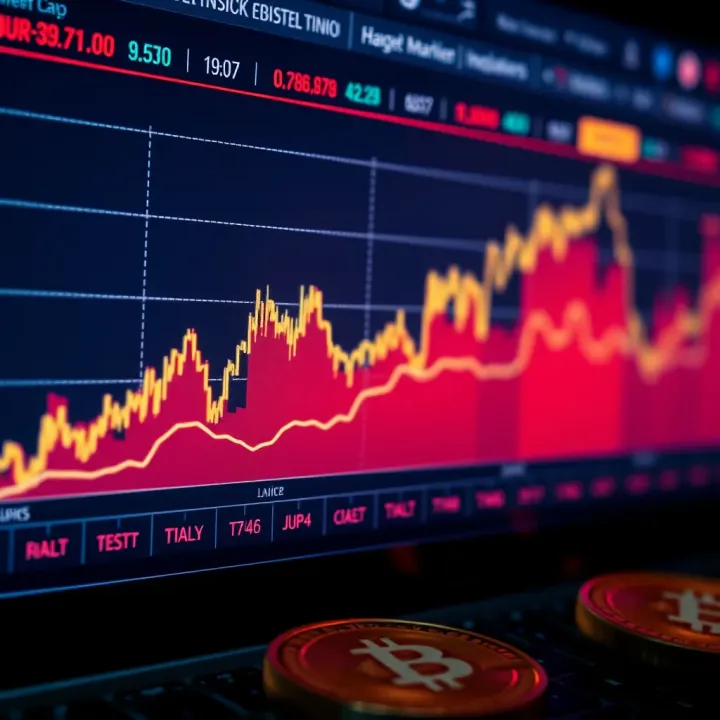
📈 Explore Bitcoin price trends and market drivers shaping its future. Learn expert insights and challenges for Nigerian investors trading Bitcoin safely and smartly. ₦

📊 Get the latest on Bitcoin price trends this week! Explore key influences like global events, regulations, and market moves to plan your ₦ investments wisely.
Based on 9 reviews