
Understanding Tiering: How It Shapes Nigerian Markets
Discover how tiering ranks products, services, and customers for smarter pricing and service delivery across Nigerian markets 📊📈 Learn benefits and challenges.
Edited By
Isabella Wright
Derivatives are financial contracts whose value depends on an underlying asset such as commodities, currencies, stocks, bonds, or even interest rates. In Nigeria, derivatives have become an increasingly important tool for investors, traders, and companies aiming to manage financial risks or explore speculative gains in the local market.
Unlike directly buying or selling an asset, derivatives let you bet on the price movement of these assets without owning them outright. For example, a cocoa farmer in Ondo state might use derivatives to lock in prices ahead of harvest, protecting against the risk of price drops. Meanwhile, an investor on the Nigerian Stock Exchange (NGX) may speculate on the future price of a stock or currency.
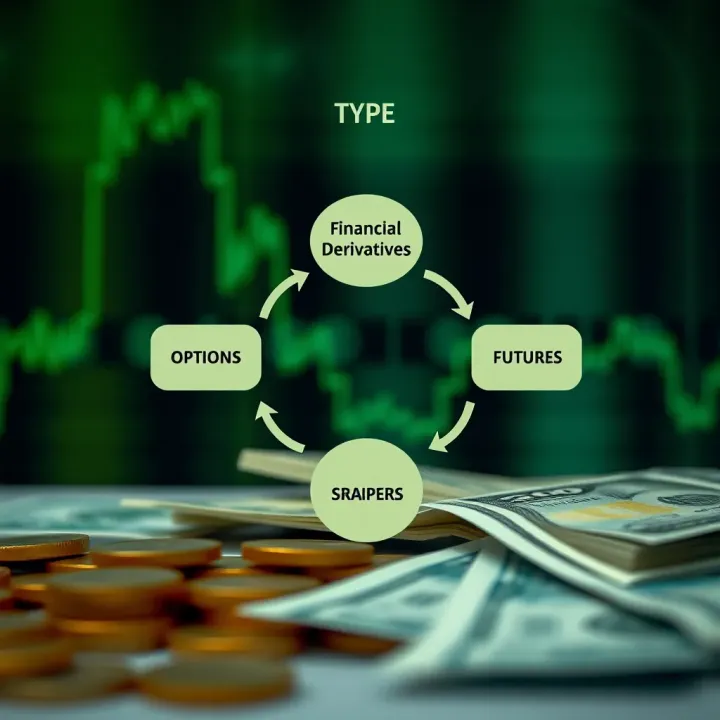
Futures Contracts: Agreements to buy or sell an asset at a fixed price on a future date. Used by commodity traders or exporters to hedge against price volatility.
Options Contracts: Give the buyer the right, but not the obligation, to buy or sell an asset at an agreed price before expiry. Useful for managing uncertainty while keeping some flexibility.
Swaps: Agreements to exchange cash flows or assets, like interest rate swaps, which help banks and firms manage financing costs.
Despite their global popularity, derivatives in Nigeria are still developing. The NGX introduced derivatives trading recently, but liquidity and public participation remain relatively low. This means prices can sometimes behave unpredictably, increasing risk for some participants.
Hedging: Businesses and investors use derivatives to protect against adverse price changes. For instance, an oil importer might hedge against naira depreciation using currency derivatives.
Speculation: Traders may buy derivatives to profit from expected price changes. Speculation can yield high returns but carries high risk.
Arbitrage: Exploiting price differences of the same asset across markets can provide profit with lower risk.
Understanding derivatives helps Nigerian market participants navigate price swings, safeguard business finances, and find new investment opportunities. However, strong regulatory oversight and market education are needed to improve confidence and reduce misuse.
This article will further explain derivatives, their types, uses, and risks, with insights tailored to the Nigerian financial ecosystem.
Derivatives are financial agreements whose value depends on an underlying asset, such as commodities, stocks, currencies, or interest rates. They provide a way for traders, investors, and businesses to manage risk, speculate on price movements, or access asset classes indirectly. Understanding derivatives is essential in Nigerian finance because they offer tools that can protect investments against naira volatility, commodity price shifts, and interest rate changes common in our markets.
At their core, derivatives are contracts between two or more parties. Their price is not determined in isolation but linked directly to another asset's performance. This underlying asset can be a physical commodity like crude oil, a stock listed on the Nigerian Stock Exchange, a foreign currency such as the US dollar, or even a benchmark interest rate like the Monetary Policy Rate set by the Central Bank of Nigeria (CBN).
This connection offers practical benefits. For example, a Nigerian firm importing goods can enter into a currency derivative to lock in an exchange rate, reducing the risk of the naira weakening before payment. This hedges their exposure and helps with budgeting the cost in naira reliably.
Common underlying assets include:
Commodities: Nigeria's economy relies heavily on crude oil and agricultural products. Price swings in these commodities directly affect businesses. Derivatives tied to these commodities allow businesses to stabilise costs or revenues.
Stocks: Shares of Nigerian companies serve as underlying assets, enabling investors to hedge or speculate on share price movements without immediate ownership.
Currencies: Exchange rate fluctuations impact international trade and investment. Currency derivatives shelter participants from adverse changes.
Interest Rates: Particularly relevant for banks and borrowers, interest rate derivatives help manage the risk of changing lending or deposit rates amid CBN policy shifts.
Futures are standardised agreements to buy or sell an asset at a set price on a future date. These contracts trade on organised platforms, making them transparent and accessible. For instance, a cocoa processing company might use futures contracts to fix prices months ahead, avoiding surprises if global cocoa prices spike suddenly.
In Nigeria, futures might be less common in daily trading but show potential as market infrastructure develops. They provide a way to guarantee prices and ensure supply chain stability.
Options give the buyer the right, but not the obligation, to buy or sell an asset at a specific price before expiry. For example, an investor fearing the naira might weaken further can buy a currency option to protect their naira value without locking in immediately.
This flexibility allows both hedging and speculative strategies. Nigerian traders can use options to take calculated risks or cap potential losses, which can be useful in our volatile market.
Swaps involve exchanging cash flows or obligations between parties, commonly linked to interest rates or currencies. Banks often use interest rate swaps to convert fixed-rate loans into floating rates or vice versa, managing exposures to changing economic conditions.
For Nigerian companies, swaps can optimise borrowing costs or manage currency exposures. However, their complexity means they suit well-informed investors and institutions rather than casual traders.
Forwards are customised contracts between two parties to buy or sell an asset at a future date and predetermined price. Unlike futures, forwards are over-the-counter (OTC) deals, not traded on formal exchanges.
A Nigerian exporter might enter a forward contract to sell dollars earned abroad at a fixed naira rate, securing revenue despite naira fluctuations. Although forwards carry counterparty risk, they offer tailored solutions matching the exact needs of traders or businesses.

Derivatives like futures, options, swaps, and forwards provide Nigerian market participants with versatile tools to manage risks tied to fluctuating commodity prices, exchange rates, and interest rates. Knowing how each works allows you to choose the right approach for your investment or business strategy.
Derivatives serve as valuable tools in Nigerian business and investment, providing ways to manage risks and tap into profit opportunities. They are especially relevant given Nigeria's economic realities, such as naira volatility, commodity dependence, and interest rate shifts. Businesses and investors use derivatives not just to protect themselves from market swings but also to diversify and optimise their financial positions.
Currency risk is a daily headache for Nigerian importers, exporters, and investors exposed to foreign exchange moves. Derivatives like currency forwards or options allow these players to lock exchange rates in advance or limit potential losses. For example, an exporter expecting payment in dollars in three months can use a forward contract to fix the naira rate now, shielding against further naira depreciation. This hedging reduces uncertainty and helps in budgeting.
Nigeria’s economy depends heavily on oil, agricultural produce, and metals—commodities with prices often bouncing unpredictably. Producers or buyers of crude oil, cocoa, or palm oil use future contracts to fix prices and protect cash flows. A cocoa farmer, for instance, may enter into futures contracts to guarantee a certain selling price before harvest, offsetting the risk of market price declines at sale time.
Interest rates in Nigeria fluctuate due to monetary policy and economic shifts. Businesses and lenders exposed to variable rates can swap fixed and floating interest payments using swap contracts, stabilising debt service costs. A company with a ₦500 million loan on a variable rate might convert it to fixed rate through a swap, ensuring predictable interest expenses despite Central Bank of Nigeria (CBN) rate changes.
Speculators use derivatives to bet on expected price shifts of stocks, currencies, or commodities. If a trader predicts naira appreciation, they might buy currency options to profit from favourable moves. This speculative role adds liquidity to markets but carries higher risk, as losses can mount just as quickly.
Derivatives allow traders to control large asset values with a fraction of the full investment—called leverage. For example, purchasing an option on a commodity contract gives exposure to the full amount’s price movement but requires only initial premium payment. While leverage boosts potential profits, it also magnifies losses, demanding careful margin management.
Derivatives enable Nigerian investors to venture beyond traditional stocks and bonds. With derivatives linked to foreign currencies, global commodities, or interest rates, investors broaden portfolio exposure without directly buying foreign assets. This access helps in capturing returns from diverse sources while managing local market constraints.
Investors balance their portfolios by combining derivatives with underlying assets to reduce risk levels. For example, a portfolio heavy in Nigerian bank stocks vulnerable to interest rate hikes may use interest rate futures or options to offset potential losses. This risk balancing supports more stable returns amid market uncertainties.
Nigerian businesses and investors who understand derivatives can better navigate market ups and downs. The key is to use these tools wisely, matching strategies to specific risks and goals while guarding against potential downsides.
Derivative trading in Nigeria comes with several risks that investors and traders must understand before engaging. These risks can significantly impact profits and losses, especially given the dynamic nature of Nigerian markets and the regulatory environment. Understanding these risks helps market participants make informed decisions and manage their exposure effectively.
Price swings and valuation challenges are among the most visible risks in derivative markets. Prices of derivatives depend on underlying assets like commodities, stocks, or currencies, which can be highly volatile. For example, during naira depreciation or oil price fluctuations, derivatives linked to these assets can experience sharp value changes. Valuing derivatives accurately can be tough because market conditions shift quickly, and illiquid markets exacerbate this. Traders sometimes find it hard to set the right price, which can lead to unexpected losses.
Liquidity issues in Nigerian markets complicate trading derivatives further. Unlike more mature markets, Nigerian derivatives often have limited trading volumes. This means finding a buyer or seller for a particular contract at the right time and price can be challenging. In such cases, investors might be forced to accept unfavourable prices or hold positions longer than intended. For instance, a trader trying to exit a futures contract on crude oil might struggle if the market is thin, increasing both costs and risks.
Default risks from parties involved are critical in derivative trading. Since derivatives are contractual agreements, one party's failure to meet obligations—such as payment or delivery—can cause losses for the other. In Nigeria's relatively less developed derivatives space, not all counterparties have strong credit ratings or guarantees, raising the chance of defaults. For example, if a smaller firm defaults on a swap agreement tied to interest rate payments, the counterparty could face direct financial setbacks.
The role of clearing houses and settlement processes is vital in reducing counterparty risks. Clearing houses act as intermediaries that guarantee trades settle as agreed, even if one party fails. However, Nigeria's derivatives market still sees limited use of such centralised clearing, increasing reliance on bilateral agreements that carry higher counterparty risk. Enhancing clearing infrastructure would protect investors and attract more participation by boosting confidence in timely and accurate settlements.
Compliance with Nigerian Securities and Exchange Commission (SEC) rules presents another layer of risk. Derivative traders must navigate regulations designed to ensure market integrity and protect investors. Non-compliance can lead to penalties, trading suspensions, or reputational damage. The SEC monitors activities to curb practices like insider trading or market manipulation, which can distort prices and harm ordinary traders. Staying updated on regulatory changes is therefore essential for all market players.
Operational mistakes and system failures also pose practical risks. Trading derivatives often involves complex systems, digital platforms, and timely decision-making. Technical glitches, human errors, or communication breakdowns can lead to execution errors, unintended positions, or missed opportunities. For instance, a poorly configured stop-loss order on a volatile transaction may not trigger as expected during a system outage, causing greater than planned losses. Nigerian markets sometimes suffer infrastructural issues like power outages and slow internet, which make smooth operations harder.
Proper risk management and educating traders about these risks strengthen the Nigerian derivatives ecosystem, helping prevent avoidable losses and fostering sustainable market growth.
By recognising and preparing for these risks, investors in Nigeria can navigate derivative trading with more confidence and minimise adverse outcomes.
The Nigerian derivatives market is still evolving but plays a significant role in offering investors tools to manage risk and tap into new profit avenues. As derivatives rely on underlying assets, their relevance grows with the size and complexity of Nigerian financial activities. This segment highlights key products, market players, and regulatory frameworks, providing a snapshot of current realities and what lies ahead.
The Nigerian Stock Exchange (NSE) offers several derivative contracts, mainly futures and options tied to equities and indices. These allow investors to hedge positions or speculate on market movements without owning the underlying shares. For example, a trader expecting the NSE All-Share Index to surge might buy index futures to profit from the rise, or sell options to earn premiums if market volatility increases.
Besides exchange-traded contracts, OTC (over-the-counter) derivatives such as swaps and forwards are used by banks and corporate clients to manage risks related to currency fluctuations, interest rates, and commodity prices like crude oil. However, OTC trades tend to be less transparent and require strong institutional relationships.
Banks, brokerage firms, and other financial institutions form the backbone of Nigeria’s derivatives market. Banks often act as market makers providing liquidity and pricing services, while brokers connect retail and institutional investors to these products. Some institutions also offer bespoke derivative solutions tailored to Nigerian companies’ unique exposure—like fixed-for-floating interest rate swaps helping businesses cope with CBN monetary policy adjustments.
The Securities and Exchange Commission (SEC) Nigeria and the Central Bank of Nigeria (CBN) jointly oversee derivative trading to ensure fair practice and market stability. SEC regulates market transparency, licensing brokers, and enforcing rules against market abuse. Meanwhile, CBN focuses on systemic risks related to currency and monetary policy impacts.
Recent policies have aimed at tightening framework for derivatives, especially OTC products, to reduce counterparty risks and increase market confidence. These include requirements for reporting transactions, capital adequacy, and compliance with anti-money laundering rules. SEC’s push for e-dividend platforms and digital trading also signals efforts to improve accessibility and efficiency.
Naira volatility remains a major hurdle, discouraging some investors from engaging robustly with derivatives as price swings inflate costs and risks. Additionally, the market’s relatively shallow depth limits liquidity, causing wider bid-ask spreads and reduced price discovery efficiency. These barriers affect both institutional and retail participation.
That said, fintech innovations and exchange upgrades present clear opportunities. Platforms like Paystack and Flutterwave have revolutionised payment processing, and similar technological advances can streamline derivatives trading with better technology, safer contracts, and faster settlements. Moreover, expanding digital literacy and regulatory willingness to embrace newer financial products suggest the market could gain more traction, especially if liquidity improves and more Nigerians gain access through mobile-friendly solutions.
The Nigerian derivatives landscape offers practical financial tools but requires steady growth in regulation, infrastructure, and investor education to reach full potential.
Trading derivatives requires more than just understanding market moves; it demands a clear grasp of personal risk appetite, access to credible platforms, and sound strategies to guard against losses. Nigerian investors, whether seasoned traders or new entrants, must weigh these factors carefully to navigate the complexities of the derivatives market.
Understanding one's risk tolerance and experience is vital before entering derivative trades. These contracts can lead to quick gains but similarly steep losses, especially in volatile markets like Nigeria’s forex or commodity space. For example, an investor new to derivatives trading might find the swings in oil futures unsettling, whereas an experienced trader could capitalise on short-term fluctuations. Assessing your comfort with risk and understanding how derivatives amplify exposure helps prevent decisions that can wipe out capital unnecessarily.
Equally important is the importance of proper education and advice before jumping in. Many Nigerian investors learn about derivatives from hearsay or social media, which often lacks depth and accuracy. Attending seminars, engaging with licensed financial advisers, or following quality content from firms like the Nigerian Stock Exchange (NGX) or Securities and Exchange Commission (SEC) can bridge this gap. Without adequate knowledge, the chance of falling prey to scams or making costly errors rises sharply.
One practical tool is the use of stop-loss orders and limits. These are preset orders investors place to automatically exit a trade when prices hit a certain level, curbing potential losses. For instance, if you buy an options contract on cocoa futures at ₦3,000 per tonne, setting a stop-loss at ₦2,700 can prevent bigger losses if prices drop suddenly. In Nigerian markets, where liquidity may fluctuate, stop-loss orders provide a safety net against unexpected market shocks.
Another critical strategy is diversification and position sizing. Rather than placing hefty sums on a single derivative, spreading investment across different contracts or limiting exposure per trade reduces risk. A trader could split funds between currency futures, interest rate swaps, and commodity options, ensuring that a downturn in one market doesn't entirely undermine the portfolio. Careful position sizing also means using only a portion of your capital per trade, protecting against outsized losses that are tough to recover from.
Accessing derivatives requires going through registered brokers and exchanges. The Nigerian Stock Exchange, for instance, offers regulated futures contracts and options, ensuring that buyers and sellers operate within a legal framework that enhances security. Working with brokers licensed by SEC Nigeria guarantees that transactions comply with regulatory standards, reducing the risk of fraud.
On the other hand, emerging online platforms and fintech solutions are broadening access. Platforms like Kuda, OPay, or Flutterwave are beginning to integrate derivatives trading features or connect investors with market offerings. These digital solutions often provide educational resources, ease of transaction via mobile apps, and quicker settlement processes. However, investors must still verify the legitimacy of these platforms and ensure they comply with Nigerian financial regulations before committing funds.
Remember, derivatives carry significant risks, but a well-informed Nigerian investor who plans carefully and uses proper tools can navigate effectively and potentially boost returns.
Discover how tiering ranks products, services, and customers for smarter pricing and service delivery across Nigerian markets 📊📈 Learn benefits and challenges.
🔐 Learn how to use DerivLogin for safe trading in Nigeria. Get step-by-step registration, solve login issues fast, and protect your account from scams.
Explore Binary.com with this clear guide for Nigerian traders 🇳🇬. Learn about platforms, trade types, account setup, funding, withdrawals & smart tips 📈.
Explore how to invest smartly with Olymp Trade 📈, manage risks, and use handy tools for profit in Nigeria’s ₦ market. Tips tailored for Nigerian investors. 🇳🇬
Based on 13 reviews