

Understanding Tesla Stock Price Trends
📈 Explore Tesla's stock price trends, key factors shaping TSLA shares, earnings impact, and innovation insights tailored for Nigerian investors.
Edited By
Matthew Price
Tesla's share price has attracted significant attention worldwide, not least among Nigerian investors keen on electric vehicle (EV) stocks. Understanding what shapes the price movement requires looking beyond surface-level trends to the core factors driving value.
Since its listing, Tesla’s stock has exhibited volatility, often fluctuating sharply on company announcements, production reports, and broader market sentiments. Unlike established automakers, Tesla’s valuation strongly reflects investor expectations about its future growth rather than current profits alone. For instance, key milestones like reaching production targets for the Model 3 or unveiling new battery technology tend to cause sudden price jumps.
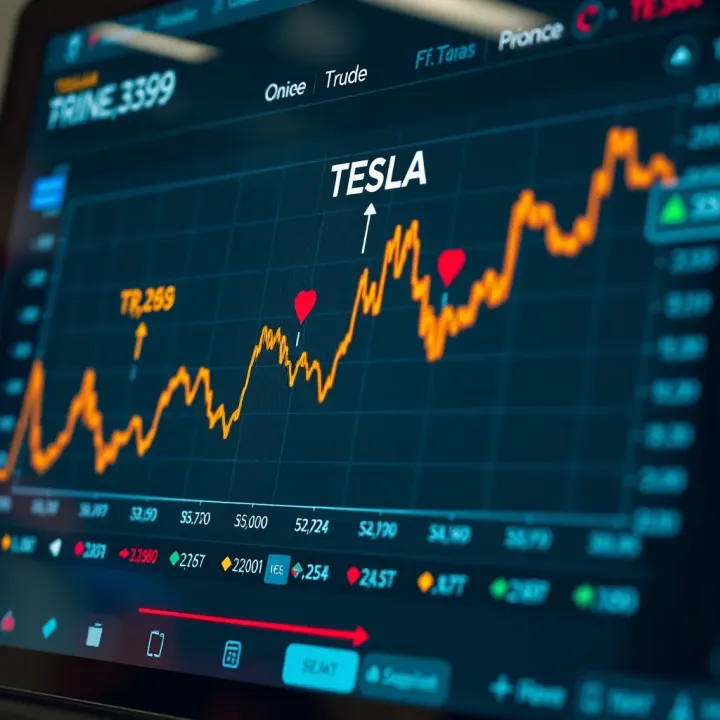
Several drivers influence Tesla’s share price:
Company Performance: Quarterly earnings, vehicle delivery numbers, leadership decisions, and innovation updates directly affect investor confidence.
Industry Developments: Movements in the EV sector, competition from legacy carmakers going electric, and regulations on emissions shape market perception.
Global Economic Factors: Exchange rates, commodity prices (especially lithium and cobalt), and geopolitical events impact costs and supply chains.
Smart investors know that Tesla’s share price won’t move in isolation. It reacts to global trends like oil price shifts and government policies on renewable energy.
For Nigerian investors, specifically, it’s important to consider currency risks with the naira, as Tesla trades in US dollars. Platforms like Interactive Brokers or local fintechs offering global market access often provide routes for fractional shares purchase, letting Nigerians participate without committing large sums.
Aside from watching Tesla’s key financial releases, traders should keep an eye on CBN’s foreign exchange policy since naira volatility can affect buying power and repatriation of dividends. Moreover, the broader interest rate environment set by CBN and the US Federal Reserve influences capital flows into growth stocks like Tesla.
In summary, grasping Tesla’s share dynamics means paying attention to:
Internal company results and innovation
External sector shifts and competition
Macroeconomic and geopolitical factors
This rounded approach helps investors separate noise from market signals, making better decisions in a fast-moving stock such as Tesla.
Understanding Tesla's share price movement is essential for investors, traders, and analysts looking to grasp how the stock performs over time. This section offers a clear view of the historical ups and downs, current market position, and the main drivers behind price shifts. For Nigerian investors, this insight helps to time the market better and align investment decisions with broader global trends.
Tesla's journey on the stock market began in 2010 when it listed at about $17 per share. Initially, the price exhibited modest growth, as the company was still proving its technology and business model in electric vehicles (EVs). For Nigerian investors or analysts, this phase reflects the typical risks of investing in emerging sectors — early movements tend to be slow until consistent performance builds confidence.
Several key events pushed Tesla's price upwards. These include the Model S launch in 2012, which proved Tesla could build luxury electric cars; the successful ramp-up of production capabilities; and Elon Musk's high-profile strategies that drew strong investor interest. For example, announcements like the Gigafactory in Nevada or the introduction of the Model 3 sparked share rallies. Investors tracking these milestones benefit from understanding how company news impacts market sentiment.
Tesla's price has shown sharp volatility in recent years, swinging widely on quarterly earnings, regulatory announcements on EV policies, and supply chain issues. For instance, 2020 and 2021 saw major price jumps amid increased EV demand and entry into the S&P 500, while short-selling pressures caused sudden drops. Recognising this volatility helps investors prepare for swift market changes instead of reacting hastily.
As of early 2024, Tesla shares price hovered around $190 to $210 per share, reflecting a stabilisation after years of dramatic movements. This offers a clearer picture to traders and investors aiming to enter or exit positions at realistic valuations compared to past peaks above $400.
Tesla’s share performance often outpaces broad indices like the S&P 500 but remains sensitive to market swings. When the overall market dips, the stock can follow or, in certain cases, serve as a leading indicator of EV sector health. Nigerian investors monitoring the NGX or US markets should note Tesla’s influence on industry trends and the tech-heavy stock indices.

Tesla’s market capitalisation, at about $600 billion recently, makes it one of the most valuable automakers globally. This influences its weight in indices and affects investor perception. For Nigerian investors, knowing such scale assists in understanding how global funds and institutional investors treat Tesla, impacting liquidity and pricing.
Tesla's price history shows the interaction between innovation, market perception, and external forces. Tracking these movements grounds your investment choices in real data rather than speculation.
By exploring Tesla's price movements from IPO days to present, this section equips you with the necessary background to make informed investment decisions in Nigeria's growing interest in international stocks and emerging technologies.
Investors keeping an eye on Tesla shares need to consider several key factors that shape its price movements. These include the company's financial health, the state of the electric vehicle (EV) market, and broader economic and political developments. Understanding these can help traders and investors make informed decisions.
Quarterly earnings reports provide a snapshot of Tesla's financial status, showing revenue, profits, and expenses over a short period. Nigerian investors, for example, watch these reports to gauge Tesla's profitability and growth prospects. Strong quarterly results often boost confidence, driving share prices up, while disappointing earnings typically cause declines.
Production and delivery figures reveal how many vehicles Tesla manufactures and sells. This is crucial because consistent growth in production indicates rising market demand and operational efficiency. For instance, if Tesla delivers 400,000 cars in a quarter, higher than previous periods, it signals healthy demand, likely pushing the share price higher. Conversely, delays or production shortfalls can hurt the share price.
Profit margins and cash flow determine Tesla's ability to sustain its business and invest in expansion. Robust profit margins mean Tesla retains more earnings on each vehicle sold, making the company financially sound. Positive cash flow ensures Tesla can fund new projects without heavy borrowing. Shareholders often react favorably to increases in these areas because they reflect operational strength and financial stability.
Electric vehicle market demand plays a vital role. The rising global shift towards clean energy boosts demand for EVs, benefiting Tesla. In Nigeria, although EV adoption is still growing, global trends influence Tesla’s stock. When demand rises globally, Tesla's shares usually respond positively. Declines or slower adoption rates can dampen investor enthusiasm.
Competitor actions and innovations also impact Tesla. New models or breakthrough technologies from rival companies like Volkswagen or BYD can create competitive pressure, affecting Tesla's market share and investor sentiment. For example, if a competitor launches an affordable EV with better range, Tesla's share price might dip as investors reassess its dominance.
Regulatory environment and incentives affect Tesla's profitability. Government policies such as subsidies for EV buyers or emission regulations can either help or hinder Tesla's growth. For instance, stricter emission laws in Europe encourage EV purchases, benefiting Tesla’s sales, which in turn lifts its stock price.
Global supply chain challenges have a direct bearing on Tesla's production costs and timelines. Disruptions in access to semiconductors or battery materials can stall manufacturing, leading to missed targets and negative stock reactions. Nigerian investors familiar with how fuel scarcity affects local businesses can relate to these supply shocks impacting Tesla.
US and global policy influences shape Tesla’s operational landscape. Trade tensions, tariffs, or international sanctions can increase production costs or limit market access. For instance, US-China trade policies directly impact Tesla’s Shanghai Gigafactory operations, affecting investor confidence.
Currency fluctuations and inflation impact Tesla's earnings when converting profits from foreign markets. A weaker dollar or high inflation in key markets can erode revenues, causing Tesla's shares to react. Nigerian investors should note that fluctuations in the naira also impact their returns when investing internationally in Tesla shares.
Understanding these factors gives investors a clearer picture of the forces moving Tesla’s share price. Careful analysis of company performance, industry trends, and economic conditions helps reduce surprises and better position one’s portfolio.
Investing in Tesla shares from Nigeria opens up opportunities to tap into one of the world’s most talked-about electric vehicle (EV) companies. As Tesla’s global presence grows, Nigerian investors increasingly want to join the ride. This section outlines practical steps and considerations for those keen to buy Tesla stock from Nigeria, highlighting accessible platforms and potential pitfalls.
Using Nigerian brokerage platforms
Recently, some Nigerian brokers like Meristem Securities and Chaka have started to offer access to international stocks, including Tesla. These platforms act as intermediaries, allowing you to invest in US shares using the Nigerian capital infrastructure. What’s practical here is the ease of use—no need to open foreign accounts or handle complex foreign exchange directly. However, fees can be higher compared to direct global brokers, and the range of available stocks might be limited. Still, Nigerian brokerage platforms provide a more straightforward entry point for new investors.
Opening accounts with global brokers
For investors ready to explore more options, opening accounts with global brokers such as Interactive Brokers, TD Ameritrade, or Charles Schwab offers direct market access. These brokers require international documentation like valid passports, proof of address, and sometimes Nigerian Tax Identification Numbers (TIN). While the setup process demands more paperwork and understanding of foreign regulations, the benefit is broader investment choices and potentially lower brokerage costs. You also gain access to up-to-date market data and advanced trading tools.
Legal and tax considerations for Nigerians
Before investing abroad, Nigerian investors should understand local tax obligations. Capital gains from foreign stocks are taxable in Nigeria, so keeping thorough records is critical. The Federal Inland Revenue Service (FIRS) expects investors to declare earnings from international sources. Also, switching Naira to dollars for trading involves understanding foreign exchange rates and Central Bank of Nigeria (CBN) regulations. It’s wise to consult financial advisers or tax experts to navigate compliance smoothly.
Market volatility and currency risk
Tesla shares are known for price swings, which can be amplified by global market shifts and company news. For Nigerian investors, the risk is not only Tesla’s volatility but also the fluctuation of the Naira against the US dollar. For instance, if the Naira weakens sharply, gains in dollars may shrink when converted back. Conversely, a stronger dollar against the Naira can boost returns. This double-layer risk requires vigilance and a clear exit strategy.
Potential returns and dividend prospects
Tesla has shown impressive capital growth over recent years but pays no dividends, focusing profits on expansion and innovation. Nigerian investors should be ready for long-term capital gains rather than expecting regular income from dividends. This makes Tesla suitable for those who prefer growth stocks and can tolerate price ebbs and flows.
Portfolio diversification strategies
Investing in Tesla offers exposure to the EV and clean energy sector, which is growing fast but can be volatile. Nigerian investors should avoid putting all their funds into this single stock. Instead, combining Tesla shares with Nigerian equities, bonds, and other international stocks can help balance risks. Platforms like Chaka offer easy ways to build such diversified portfolios, reducing vulnerability to shocks from any one investment.
Accessing Tesla shares from Nigeria involves understanding local platforms, international brokers, and tax rules. While the potential rewards appeal to many, managing currency and market risks will protect your investment over time.
Understanding the future outlook for Tesla share price is key for investors aiming to navigate the electric vehicle (EV) market wisely. This section sheds light on upcoming developments and regulatory trends that could shape Tesla's valuation. Investors can better time their entry or exit points by keeping an eye on tangible factors like new product launches, technology progress, and changing policies globally.
New vehicle launches play a significant role in determining Tesla’s share price trajectory. The launch of models like the Tesla Cybertruck has drawn intense market attention, not just for its design but also for its potential to capture new customer segments, including pickup truck buyers traditionally loyal to brands like Ford. The success or delay of such launches directly influences investor confidence and share performance. For instance, delays in the Cybertruck release have occasionally caused Tesla’s shares to wobble as investors weigh production capacity against demand.
Energy solutions and other ventures are equally important for Tesla’s growth story. Beyond cars, Tesla's solar roofs and energy storage systems add new revenue streams, diversifying the company’s portfolio. These products can insulate Tesla’s fortunes from automobile market swings and tap into rising renewable energy use worldwide. Nigerian investors should note how increasing energy demands and off-grid power solutions in Africa may create future opportunities for Tesla’s energy division, potentially enhancing shareholder value over time.
Technology advancements such as autonomous driving and battery innovation remain central to Tesla’s competitive edge. Improvements in Full Self-Driving (FSD) software could revolutionise vehicle usage patterns, attracting tech-savvy buyers and fleet operators. At the same time, next-generation battery technologies promising longer range and reduced costs can improve Tesla’s margins and affordability. For shareholders, breakthroughs in these areas tend to signal longer-term growth prospects, swaying investor sentiment positively.
Shifting EV policies globally influence Tesla’s market access and profitability. Countries introducing firmer emission targets or phasing out petrol vehicles create fertile ground for EV adoption. For example, the European Union’s recent rules encouraging electric options in member states could raise Tesla demand there. Conversely, sudden policy reversals or subsidy removals might dampen sales, prompting share price corrections. Investors must watch such regulatory updates closely to gauge Tesla’s market risks and opportunities.
Competition from emerging players presents ongoing challenges for Tesla’s dominance. Chinese brands like BYD and NIO are expanding aggressively, offering cheaper and feature-packed alternatives in local and export markets. Tesla’s response, often involving product refreshes and cost adjustments, determines how well it can maintain market share. For Nigerian investors, understanding how Tesla stands against these rivals helps in assessing the stock’s risk profile amid intensifying competition.
Sustainability and environmental regulations also have a growing impact on Tesla’s operations and valuation. Stricter rules on supply chain transparency, battery recycling, and carbon footprint affect production costs and company reputation. Yet, Tesla’s commitment to sustainable practices often positions it favourably with ESG (Environmental, Social, Governance) conscious investors. This alignment can attract more capital inflows, supporting share price resilience. Monitoring such regulatory trends helps anticipate potential headwinds or tailwinds for Tesla's stock.
Keeping track of Tesla’s future product launches, innovation pace, and the evolving policy environment equips investors with practical insights to make informed decisions amid an inherently volatile market.
In summary, the future outlook for Tesla’s share price hinges on a mix of innovation, market expansion, and regulatory dynamics. Staying informed about these specific areas enables investors to understand potential growth drivers and risks, allowing more confident moves in a fast-changing global EV industry.
Owning Tesla shares comes with unique risks that every investor must grasp to make sound decisions. The stock's history is marked by sharp ups and downs, influenced by both company-specific events and broader market forces. Understanding these risks helps investors manage expectations, reduce surprises, and develop strategies that align with their appetite for volatility.
Tesla’s share price has seen dramatic swings since its IPO. For example, between 2019 and 2021, the stock price surged over 700% due to growing electric vehicle demand and positive earnings reports. However, it also endured swift drops, such as in early 2022 when concerns over global supply chain disruptions and inflation caused steep declines. These large price movements reflect market sensitivity to news and investor sentiment.
Price volatility matters practically because it affects how quickly your investment gains or loses value. For Nigerian investors trading through international brokers, sudden dips could mean lost opportunities or margin calls. On the flip side, spikes can offer chances to book profits or strengthen positions. Knowing when Tesla stock tends to fluctuate can aid better timing decisions.
Factors triggering these sudden jumps or drops include unexpected quarterly earnings results, production delays, comments from CEO Elon Musk, or shifts in US government policy on clean energy. For instance, a tweet by Musk has in the past sparked wild price reactions, highlighting how non-financial signals directly impact the stock’s value. Geopolitical tensions or currency fluctuations also play roles, especially for investors exposed to forex risk.
Tesla’s reliance on Elon Musk’s vision and leadership is a significant risk. Musk’s public comments and decisions often sway the share price. Should any leadership change or controversy arise, it could unsettle investors. This dependency makes the stock’s fortunes tightly linked to one person, unlike more diversified firms.
Production disruptions are another challenge. Tesla’s ambitious targets depend on complex manufacturing processes in the US, China, and Germany. Delays in new factories or supply of semiconductors can stall deliveries, shaking investor confidence. For example, during the global chip shortage in 2021, Tesla’s output was hit, causing price pressure.
Legal and reputational risks hover over Tesla as well. Lawsuits or regulatory probes concerning autopilot safety, labour practices, or Musk’s conduct can lead to fines and negative publicity. Such events may dent the brand and cause investors to rethink their position, as seen in past SEC investigations.
Investors should weigh these risks carefully against Tesla’s growth potential. While the stock offers exciting prospects, the swings and company-specific issues require a steady hand and informed strategy.
In summary, those interested in Tesla shares must accept its volatile nature and understand how leadership, production, and legal factors intertwine with market forces. Balanced knowledge of these risks equips investors to navigate Tesla’s unpredictable waters more confidently.
📈 Explore Tesla's stock price trends, key factors shaping TSLA shares, earnings impact, and innovation insights tailored for Nigerian investors.

Explore Ape Coin price predictions 📈 and key factors affecting its future value. Understand market trends, tech insights, risks & opportunities in crypto investing. 🐒

Discover key trends influencing AVAX coin price 📉📈 and get insights into prediction models to understand its future potential in Nigeria's crypto market 🇳🇬
Explore AVAX price prediction 📈 with key factors, trends, and expert insights. Understand Avalanche's market behavior—ideal for Nigerian investors 🇳🇬.
Based on 12 reviews