
New York Trading Session Time in Nigeria
📈 Understand the New York trading session in Nigeria time to boost your forex deals. Learn market hours, trading tips, and how to time your hustle for ₦-gain success.
Edited By
Emily Carter
The New York trading session plays a significant role in global financial markets, influencing everything from currency pairs to commodities. For Nigerian traders and investors, understanding the session's timing is crucial because Nigeria's time zone differs significantly from New York’s. This time difference affects market activity, liquidity, and volatility during Nigerian trading hours, making it important to align strategies accordingly.
New York operates on Eastern Time (ET), which is usually 5 hours behind Coordinated Universal Time (UTC-5) during Standard Time, and 4 hours behind (UTC-4) during Daylight Saving Time (DST). Nigeria, on the other hand, stays on West Africa Time (WAT) year-round, which is UTC+1. This means that when New York is on Standard Time, Nigerian traders are 6 hours ahead. During New York's Daylight Saving Time—typically from mid-March to early November—the difference reduces to 5 hours.
To put this into perspective, the New York session officially opens at 8:30 am ET and closes at 3:00 pm ET. For a Nigerian trader, this corresponds roughly to 1:30 pm to 8:00 pm WAT during Standard Time and 12:30 pm to 7:00 pm WAT during Daylight Saving Time. Knowing this helps traders plan their day around peak market hours when liquidity is highest and price movements are most active.
Nigerian traders often overlook the impact of the New York session timing, leading to missed opportunities or suboptimal trading decisions.
Besides timing, the New York session overlaps with the London session for a few hours, boosting market volatility and liquidity. As the largest financial hub for the US dollar, movements in New York can significantly affect the naira forex market and commodities relevant to Nigeria, such as crude oil.
For investors and brokers, awareness of these timing details allows better risk management through timely entry and exit points. It also helps avoid trading during illiquid hours when spreads widen and transaction costs increase.
Understanding these time conversions and market behaviour during the New York trading session gives Nigerian traders a tangible advantage. They can optimise their trading strategies, whether in forex, equities, or commodities, by focusing on the periods where market activity peaks and spreads narrow.
In short, aligning one's trading operations with the New York session timing is a practical step toward smarter and efficient market participation from Nigeria.
The New York trading session is one of the most significant periods in the global financial market calendar. For Nigerian traders and investors, understanding this session helps in timing trades, managing risks, and tapping into the highest liquidity and volatility offered worldwide. Since the New York market overlaps with other key markets for a few hours, it often sets the tone for price movements, making it a vital window for making informed decisions.
The New York trading session runs from 8:00 am to 5:00 pm Eastern Standard Time (EST). These hours correspond to 1:00 pm to 10:00 pm West Africa Time (WAT), which Nigeria uses. This session represents the main trading hours of the New York Stock Exchange (NYSE) and Nasdaq, as well as the peak period for foreign exchange (forex) trading centered in the United States. Nigerian traders often align their activities with these hours to access better price movements and market depth.
This session marks the start of trading in the Americas and is the second largest forex session by volume after London. Because many multinational corporations and banks operate in New York, major economic data releases and corporate reports are timed here, influencing global markets. It is also when the US Federal Reserve and related economic institutions may make announcements that affect global interest rates and currency values. Nigerian investors thus watch this session closely to adjust portfolios or seize cross-border trading opportunities.
The NYSE is the world’s largest stock exchange by market capitalisation. It lists major US and international companies, including Nigerian firms that cross-list or have dealings in the US. For Nigerian investors interested in blue-chip stocks or multinational brands, the NYSE session offers the opportunity to trade directly during its operating hours, often with increased liquidity compared to other times.
Nasdaq is renowned for technology and growth stocks like Apple, Microsoft, Google, and Tesla. Nigerian traders watching the tech boom often focus on this exchange for its volatility and rapid price movements. The session overlaps with NYSE but sometimes shows more dynamic price action, beneficial for short-term traders keen on quick responses to market news.
The New York session is a key window for forex trading because the US dollar (USD) is involved in about 88% of all forex trades globally. Currency pairs such as USD/NGN, EUR/USD, GBP/USD, and USD/JPY experience some of their most active trading periods during this time. For Nigerian traders betting on naira movements or looking to hedge foreign currency exposure, the New York session’s liquidity and volatility provide practical benefits.
Traders benefit most by syncing their activity to New York hours, when global volume and volatility peak.
New York session runs 8:00 am to 5:00 pm EST (1:00 pm to 10:00 pm WAT)
It includes major exchanges like NYSE and Nasdaq
Critical for monitoring the US dollar and major economic releases
Offers Nigerian traders ideal times to trade stocks and forex
Understanding these basics sets the foundation to leverage the New York session effectively from Nigeria, whether for forex speculation, stock investments, or informed portfolio management.
Understanding the New York trading hours from a Nigerian perspective helps local traders and investors plan their activities effectively. Since financial markets in New York move according to their local time, aligning with these hours is crucial to seize opportunities, avoid unexpected risks, and react to market volatility promptly.
Nigeria operates on West Africa Time (WAT), which is generally 5 hours ahead of Eastern Standard Time (EST), where New York is located. For example, when it is 9 am in New York (market open), Nigeria’s local time is 2 pm. This fixed time gap allows Nigerian traders to anticipate market openings and close their positions accordingly.
However, this standard time comparison requires adjustment during New York’s daylight saving time (DST). Nigeria does not observe DST, so when New York moves its clocks forward by one hour—usually in March—the time difference shrinks to 4 hours. This shift means the New York market opens at 1 pm Nigerian time instead of 2 pm. Traders must keep this in mind to avoid missing the start of the session or misjudging trade timings.
Daylight saving affects not just market hours but also volatility periods. For instance, economic reports released during New York hours might come at different Nigerian local times depending on DST. Nigerian traders should watch the calendar to adapt quickly.
The New York Stock Exchange (NYSE) and Nasdaq officially open at 9:30 am and close at 4 pm New York time. Translated to Nigerian time, this becomes 2:30 pm to 9 pm during EST and 1:30 pm to 8 pm during DST periods. These hours cover peak liquidity and price movement, making them the prime window for active trading.
Knowing these hours lets Nigerian traders schedule their monitoring, order placement, or risk management steps more precisely. For example, a day trader in Lagos can prepare to open trades shortly after 2:30 pm or 1:30 pm, depending on the season, to catch early market momentum.
The New York markets operate Monday through Friday, excluding US public holidays such as Independence Day or Thanksgiving. Nigerian traders need to be aware that market closure on these days means no trading opportunities and possibly delayed responses to news impacting global markets. Planning trades around these non-trading days helps avoid unnecessary exposure.
Being conscious of trading hours and time differences saves Nigerian traders from surprises in market availability and ensures timing aligns with key events.
In summary, understanding when the New York session runs in Nigerian time allows investors and traders to act decisively. It also helps accommodate the daylight saving time changes and align trading strategies with the session’s opening and closing, maximising potential gains while managing risks effectively.
The New York trading session holds significant weight for Nigerian traders and investors due to its high liquidity and market movements that often dictate global trends. Because it overlaps partially with the London session, it benefits from combined market activity, which results in tighter spreads and faster execution—a major advantage for traders operating from Nigeria navigating forex or stock markets.
Liquidity refers to how easily assets can be bought or sold without causing big price changes. During the New York session, liquidity rises sharply as major US markets like the NYSE and Nasdaq become active. For Nigerian traders, this means they can enter and exit positions more efficiently, paying smaller transaction costs. For example, a trader working with popular forex pairs like USD/NGN or EUR/USD will notice improved order fills and less slippage during this window.
Market volatility also picks up during this session, particularly around the opening hours between 1:30 pm and 4:00 pm Nigerian time (WAT). This volatility offers both opportunities and risks—sharp price swings can yield profits but demand careful risk management. Typical patterns include strong price moves following US economic data releases, such as nonfarm payroll reports or Federal Reserve announcements. Understanding these patterns helps Nigerian traders plan their activities around times when the market is most active yet predictable to an extent.
The New York session influences several major currency pairs heavily traded by Nigerians. These include USD/NGN, USD/EUR, and USD/GBP pairs, which experience greater volatility and volume during this time, creating better opportunities for intraday strategies. For example, the USD/NGN pair is tightly linked to US dollar flows via remittances and imports, so price moves often reflect broader economic signals from the US and Nigeria.
On the stock front, Nigerian investors gain access to international equities listed on US exchanges through local brokers or platforms offering cross-border trading. Popular names like Apple, Microsoft, and Tesla see increased trading volumes during New York hours, giving Nigerian investors a chance to buy or sell shares in real time. This access diversifies portfolios beyond the Nigerian Stock Exchange (NGX) and allows investors to tap into sectors less represented locally, such as US tech or energy.
Understanding the New York session’s liquidity and volatility, alongside the currency and stock options it presents, gives Nigerian traders and investors a more confident footing to make timely and profitable decisions.
Overall, recognising the New York trading session’s rhythms and market dynamics equips Nigerian market participants with practical tools to enhance their trading strategies and broaden their investment horizons.
The New York trading session offers Nigerian traders unique opportunities, but making the most of it requires smart timing and effective use of available tools. Understanding when the market becomes most active during the session and choosing the right platforms can significantly boost trading success.
The best moments for active trading within the New York session are typically during the overlap with the London session and the first few hours after the New York markets officially open. This period usually sees heightened market liquidity and sharper price movements, especially for major currency pairs like USD/EUR, USD/NGN, and stocks listed on NYSE or Nasdaq. For Nigerian traders, this often translates to trading between 2:30 pm and 7:00 pm local time, which aligns with the peak trading activity.
That said, overnight positions come with risks because markets can move on news released when Nigerian traders are offline. To manage these risks, traders should employ strategies like setting stop-loss orders to limit potential losses or closing vulnerable positions before the session ends. For instance, if you hold a position in an American stock after market hours, sudden company announcements could cause price swings. Being proactive about risk controls prevents nasty surprises next morning.
Many Nigerian traders rely on sophisticated digital platforms like MetaTrader 4 (MT4) and MetaTrader 5 (MT5) for their user-friendly interfaces, real-time charting, and automated trade options. Local brokers increasingly offer access to these platforms with better support for naira funding and withdrawal. For example, a trader using MT5 can easily customise indicators to spot New York session trading patterns or use expert advisors that execute trades during peak hours automatically.
Funding and withdrawing from these platforms in Nigeria has become simpler thanks to fintech solutions such as Paystack and Flutterwave, alongside banks like GTBank and Access Bank. These services offer swift transactions, which matters when you want to act fast on New York session swings. Some brokers even allow funding via USSD codes or mobile banking apps, removing delays and obviating the need to visit physical bank branches.
Successful trading in the New York session hinges on syncing your trades to peak market hours and using technology that fits Nigeria's unique financial landscape.
By knowing when to trade and leveraging platforms designed to suit local needs, Nigerian traders can capture opportunities the New York session presents, balancing profit potential with mindful risk management.
Trading during the New York session offers many opportunities for Nigerian traders, but it also comes with distinct challenges. Understanding these hurdles helps traders plan better and avoid costly mistakes. Two of the key difficulties stem from local infrastructural issues, like inconsistent power and internet, alongside managing currency risks and staying on top of fast-moving global news.
Unstable power supply remains one of the biggest hurdles Nigerian traders face when engaging with the New York trading session. Since the session runs mainly in the afternoon and evening Nigerian time — often well past NEPA/DISCO scheduled hours — power outages can leave traders cut off at critical moments. This interruption can prevent timely order execution or force emergency trades on the wrong side of the market. For example, a trader might miss a price movement on the dollar/naira pair, losing out on potential profits or increasing exposure.
Additionally, internet connectivity issues compound the problem. Even when power is available, slow or unreliable internet can cause delayed quotes and failed trade executions. This risk is especially severe for forex trading, where prices can shift within seconds. Traders relying on mobile data or home broadband in Lagos or Abuja experience these bottlenecks severally, making real-time market engagement difficult.
To maintain connectivity and avoid losing access during the crucial New York hours, many Nigerian traders invest in backup power solutions like inverters and solar installations. These devices help keep laptops and routers running during outages. Moreover, using mobile network providers with strong 4G or 5G coverage, such as MTN or Airtel, adds resilience. Some traders also subscribe to multiple internet sources to switch automatically if one fails. Offline trading platforms that allow setting limit orders can offer some protection too.
Currency risk is a real thorn for Nigerian traders operating in foreign markets. The naira’s volatility, driven by fluctuating oil revenues and foreign exchange scarcity, can erode profits quickly when converting earnings back to local currency. For instance, a trader might close a position with a gain in US dollars but lose value if the naira weakens sharply shortly after.
Besides, exchange rate policies by the Central Bank of Nigeria (CBN) and black market differentials create unpredictability. Nigerian traders must monitor parallel market rates and official rates to gauge true currency exposure. Tools like currency hedging can help, but they’re not always accessible or affordable for retail traders.
Real-time access to global financial news is another challenge but critical to successful trading. The New York session reacts rapidly to US economic indicators, Federal Reserve statements, and geopolitical events. Missing or lagging on news might cause traders to make decisions based on outdated information, leading to losses. Platforms like Bloomberg and Reuters offer live updates but usually require subscriptions.
A practical approach for many Nigerian traders is to use Google Alerts, trusted forex news websites, and Telegram channels dedicated to market news. Setting notifications for key economic releases and US market events ensures traders stay informed even if they can’t watch markets constantly. Traders who develop routines around news timing tend to manage risks better and seize emerging opportunities more swiftly.
Given these challenges, Nigerian traders aiming to engage actively in the New York trading session must adapt their strategies and infrastructure. Consistency in power and internet supply paired with smart currency risk management and news tracking makes the difference between success and missed chances.
In summary, while New York trading hours open global doors, tackling power and internet instability alongside currency and information challenges is essential for Nigerian traders who want to thrive.
📈 Understand the New York trading session in Nigeria time to boost your forex deals. Learn market hours, trading tips, and how to time your hustle for ₦-gain success.
📈 Learn the exact London trading session time for Nigeria 🇳🇬, how daylight savings shift the clock, and smart tips for forex traders to maximize profit.
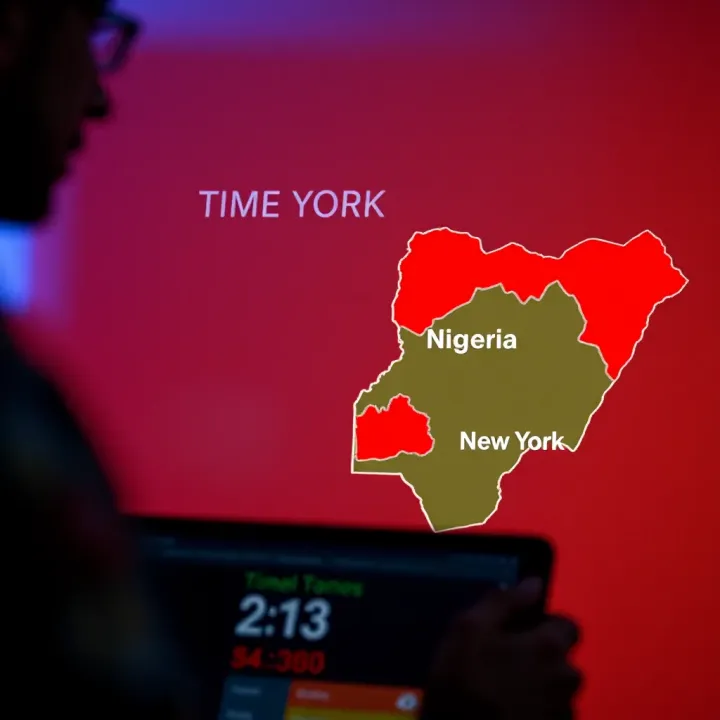
📈 Discover the exact New York trading hours in Nigeria, how daylight savings affect them, and why this matters for your trading strategies and market moves.
🕒 Discover London Forex session times in Nigerian local hours! Learn how overlaps with other markets affect your trading moves. Get practical tips to boost profits now!
Based on 6 reviews