
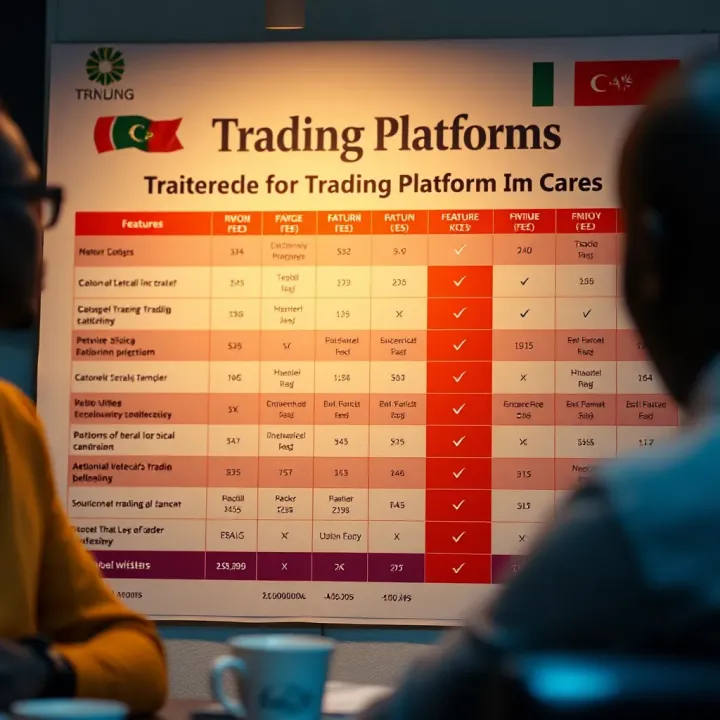
Choosing the Best Trading Platform in Nigeria
Find the perfect trading platform in Nigeria 🇳🇬. Compare fees, security, and support to trade confidently, whether you're a beginner or pro 📊💼.
Edited By
Isabella King
Proprietary trading firms give traders the chance to trade with the firm’s own money instead of risking their personal funds. For Nigerian traders, this makes prop firm challenges an attractive option to grow capital without heavy upfront investment. However, finding the cheapest prop trading challenge takes some effort because costs can vary widely.
These challenges typically require a fee to access the firm's capital. This fee covers training, technology access, and risk management. For Nigerian traders, forex costs and payment methods can add to this expense, so picking an affordable option affects your bottom line significantly.

Here are key factors affecting the cost of prop firm challenges:
Challenge fee: Usually ranges from a few thousand naira to hundreds of thousands, depending on the firm's reputation and the account size.
Account size: Larger capital means higher fees but bigger profit potential.
Time limits: Shorter challenge periods might require more aggressive trading, raising risk.
Profit targets and drawdown limits: Some challenges have tough targets, which can impact how much time and risk you need.
For instance, some prop firms offer trial challenges at around ₦40,000 to ₦60,000, while others go beyond ₦200,000. Considering forex charges when paying from Nigeria, these can escalate if you’re not careful.
Choosing a firm with clear terms and affordable fees can ease entry. Firms like The5ers or FTMO, popular in Nigeria, may have different pricing and rules, so compare before committing.
In summary, understanding the hidden costs and trading conditions helps you pick a prop firm challenge that won’t stretch your finances too far. Next, we will break down how payment logistics work and share tips to join cheaply without compromising your chances.
For traders, knowing what proprietary (prop) firm challenges involve is key to making smart choices about joining one. These challenges open a door to trading with significant capital without the need to use personal savings or loans—a vital option in Nigeria’s tight forex and economic environment. Getting the basics right helps traders avoid costly mistakes and pick the best challenges that suit their financial limits and trading style.
Proprietary trading firms are companies that provide traders with the firm's capital to trade financial markets such as forex, stocks, or commodities. Instead of risking their own money, traders use the firm’s funds and share profits based on agreed terms. This setup means traders can scale their positions beyond what their personal budgets would allow.
A prop firm challenge is a step system to qualify for a funded account. Traders usually pay a fee to enter, then must meet specific targets and abide by risk rules within a limited period. For example, a trader might be required to make a 10% profit within 30 days while keeping losses below 5%. Passing the challenge earns them a funded account, allowing real trading with the firm’s capital.
Accessing larger capital without using personal funds is a big draw for Nigerian traders. With naira often depreciating and forex restrictions tightening, raising sufficient trading capital is tough. Prop firms allow traders to tap into bigger sums, sometimes $50,000 or more, with only a fraction of that as an entry fee—often under ₦200,000. This makes trading a viable career option beyond savings or informal loans.
Moreover, the profit potential significantly increases. Personal accounts in Nigeria might only afford ₦500,000 or less, limiting gains. With a funded prop firm account, a 5% monthly profit on a $50,000 account translates to ₦4–5 million monthly—substantially better returns if managed well.
Finally, these challenges help Nigerian traders work around local financial obstacles. Naira illiquidity or unstable exchange rates can cause personal capital to fluctuate in value or access foreign markets. Prop firms usually accept payments through platforms like Paystack or Flutterwave, which ease cross-border payments for entry fees. This practical workaround enables traders to participate in global markets steadily despite local currency issues.
Joining a prop firm challenge is more than a test. It’s a practical solution for Nigerian traders to level up their capital access, manage risk, and earn sustainably without relying on unstable local funds.
The next sections will explore costs, affordable options, and tips to trade successfully without stretching your budget.
Understanding the various costs involved in proprietary trading firm challenges is essential for Nigerian traders looking to trade without risking personal funds. This section breaks down the typical fees, so you can make informed decisions and avoid surprises that could drain your budget. Knowing what each fee covers helps you pick challenges that offer real value, especially when managing tight naira liquidity.
Entry fees and tiers of challenges usually form the main part of your upfront payment. Most prop firms charge an entry fee that corresponds to the size of the funded account you want to test for. For example, a $25,000 funded account challenge might cost around $250 (about ₦160,000), whereas larger tiers like $100,000 can jump to $800–$1,000 (₦520,000–₦650,000). These fees grant you access to trade under the firm’s conditions during the evaluation period.

Challenges are often tiered by the amount of capital you stand to control if you succeed. Choosing a lower-tier challenge can reduce upfront cost, but it also means lower potential profits. For Nigerian traders, this trade-off should be carefully weighed.
Subscription models and additional costs have become more common among prop firms. Instead of a one-time entry fee, some firms offer monthly subscriptions that give access to ongoing challenges. While this spreads costs over time, it can add up if you take longer to pass the challenge. Additional fees may also apply for extra accounts, extending evaluation time, or for access to premium support and training.
For instance, a firm may charge a $50 (₦32,500) monthly subscription on top of a $200 entry fee. Nigerian traders must consider how long they realistically need to pass and whether these recurring fees fit their budget.
Refund policies and money-back guarantees vary widely and affect risk management. Some firms offer full or partial refunds if you fail the challenge or if you withdraw early. Others have no refund options, making the fee non-recoverable. This matters because with volatile forex markets and trading risks, there's always a chance you miss targets through no fault of your own.
When choosing a lower-cost firm, try to pick one with a clear refund policy to protect your investment. For example, a firm refunding half the fee if you don't complete within 30 days can greatly reduce losses.
Size of the funded account being tested directly impacts pricing. Bigger account sizes demand higher fees since firms risk more capital backing your trades. A $50,000 funded account challenge will typically ask for double the fee of a $25,000 account.
Beyond the fee, bigger funded accounts often come with tighter rules and higher profit targets, which may increase your difficulty to succeed without risk exposure. Nigerian traders should balance their trading skill level and capital goals before picking higher tiers.
Account rules and risk limits can also affect challenge costs indirectly. Some firms impose strict rules like maximum daily drawdowns, loss limits, or number of trades allowed. Challenges with tougher risk rules might come cheaper, but require disciplined trading.
For example, a firm demanding a maximum 2% daily drawdown may price its challenge lower than a firm with 5%, because it's harder to pass with tight limits. Understand these rules beforehand, as failing due to rule breaches may waste your fee.
Firm reputation and support services count significantly when considering price. Well-established firms with a strong track record, reliable payouts, and quality educational support tend to charge more. In contrast, newer or less-known firms may offer cheaper challenges but with higher risks regarding payout reliability.
For Nigerian traders, picking a reputable firm ensures your hard-earned fees won’t end up lost. Firms providing good tech platforms, customer support during Nigeria’s business hours, and straightforward withdrawal processes are worth paying a bit extra for.
Knowing each cost component and its implications can save you money in the long run while increasing your chance of success in prop firm challenges.
Finding the most affordable proprietary trading firm challenge is a key step for Nigerian traders working with tight budgets. While the appeal of funded accounts lies in leveraging firm capital, the upfront fees can be a barrier. Exploring low-cost challenges helps traders gain access without risking too much personal funds, while still allowing growth in their trading careers.
Affordability does not mean sacrificing opportunity; rather, it means making smarter choices that fit your financial reality. Knowing which firms offer challenges under $300 (roughly ₦160,000) is a practical way to enter the market without excessive upfront investment. This price range is accessible to many Nigerian traders, making it easier to test skills on a funded account.
Several prop firms cater to traders looking for affordable challenge fees. Firms like The5ers and Funding Talent offer entry fees below $300. Starting at this level helps traders avoid the heavy financial commitment some bigger firms demand, which can be too steep especially for beginners. These lower fees open doors for more Nigerians who may be sidelined by capital restrictions or forex challenges faced locally.
Equally useful are platforms with flexible payment methods, including instalment plans, discounts during promotional periods, and local payment options through Nigerian banks or payment processors like Paystack and Flutterwave. Such flexibility eases the process for Nigerian traders, who otherwise might struggle with upfront lump sums or foreign currency transactions. Discounts during ember months or festive seasons can make challenges even more affordable.
Focusing solely on cost might mean missing critical factors that affect your profitability. For example, profit split and withdrawal terms matter greatly. Some firms offer a 70-80% profit split, allowing traders to keep a significant share of their earnings. Withdrawal frequency and ease also impact cash flow, so firms with transparent, hassle-free withdrawal policies are preferable.
Trade conditions and permitted instruments vary and influence your trading style and success. While some firms only allow forex pairs, others include indices, commodities, or cryptocurrencies. Having wider instrument access improves flexibility and hedging opportunities. Additionally, strict rules on maximum daily loss or minimum trading days can make or break your challenge success, especially on limited funds.
Technology platforms used by prop firms affect trade execution and reliability. Firms operating on MetaTrader 4/5 or cTrader are usually preferred due to familiarity and tool availability. Nigerian traders must also consider platform stability and customer support responsiveness, especially during volatile market hours. Unreliable platforms might cause slippage or order rejections, hurting your performance.
Choosing a prop firm challenge is more than picking the cheapest fee. Look closely at profit sharing, trade rules, and technology to find the best overall value for your trading goals.
By carefully weighing these factors, Nigerian traders can find affordable prop firm challenges that do not just save money but also support profitable, consistent trading careers.
When it comes to joining prop firm challenges, especially on a tight budget, managing risk is not just sensible—it’s necessary. Many Nigerian traders face financial constraints, so avoiding unnecessary losses during the challenge phase can make the difference between success and wasted funds. Equally important is maximising your chances of passing these trials without stretching your resources beyond what’s practical.
Hidden fees and strict trading rules commonly catch traders off guard. While some prop firms advertise low entry fees, additional costs can sneak in as subscription charges, platform fees, or penalty fees for breaching terms. A trader might think they’re paying ₦60,000, but end up shelling out more when forced to pay fees for exceeding daily loss limits or making disallowed trades. Often, these firms enforce strict rules around maximum drawdown or trade volume, which can severely limit your trading freedom and increase stress.
Similarly, limited time windows to complete challenges creates pressure. Some firms expect traders to hit profit targets within tight deadlines—sometimes just a few weeks. This urgency can push traders into risky decisions, risking losses rather than measured, consistent steps towards the goal. Nigerian traders balancing multiple commitments may struggle under these time restrictions, making it crucial to choose challenges with reasonable time frames to trade deliberately.
Practising with demo accounts before committing is a smart, budget-friendly way to prepare. Many prop firms offer free or low-cost demo versions of their platforms that simulate real trading conditions. This lets you familiarise yourself with the interface, test your strategies, and understand the challenge’s rules without risking money. For example, a trader might spend two months sharpening their strategy on a demo GTBank prop challenge platform before paying any fees, thus reducing costly trial-and-error mistakes.
Focusing on risk management and consistency is crucial for passing challenges. Prop firms typically require steady profit increments without big losses. Instead of chasing quick wins, stick to methods that control your risk—like using stop-loss orders, trading smaller trade sizes, or limiting daily losses. A consistent approach matches many prop firm requirements and helps preserve your capital, especially when your initial investment is limited to hundreds of thousands of Naira.
Finally, choosing challenges that fit your trading style increases your odds of success and saves money. Some props focus on day trading, others on swing or scalping styles; each has unique rules on instruments and trade size. If you prefer forex pairs during Lagos night hours, picking a challenge that allows 24-hour access to forex instruments is ideal. On the other hand, if you trade commodities or indices, ensure the firm offers those without extra fees or restrictions. Aligning your preferred style with the challenge prevents wasted attempts and inefficient spending.
Managing risks and selecting the right challenge carefully ensure your limited funds stretch further and boost your chance of funding.
By avoiding hidden trap fees, respecting challenge timelines, practising thoroughly, and tailoring your approach, you stack the cards in your favour. This practical, measured approach helps Nigerian traders on tight budgets navigate prop firm challenges confidently and cost-effectively.
Starting your journey with a prop firm challenge requires more than just funds; it demands proper preparation and understanding. These steps ensure you begin well-positioned, avoiding common setbacks that can cost money and time. Nigerian traders, especially, must pay close attention to registration and account setup due to local banking peculiarities and regulatory demands.
Most prop firms require identification and address verification through a Know Your Customer (KYC) process. For Nigerian traders, this usually means submitting a valid National Identification Number (NIN), Driver’s Licence, International Passport, or Voter’s Card. Firms use KYC to verify authenticity and prevent fraud, so submitting clear and up-to-date documents is critical. Expect to scan or photograph your documents and upload them during registration.
Funding your challenge can be tricky given foreign exchange restrictions and payment gateway limitations in Nigeria. Many prop firms accept global methods like PayPal, credit/debit cards, or wire transfers, but some also accommodate Nigerian-friendly options such as Paystack, Flutterwave, or even direct bank transfers in Naira. Before registration, confirm the payment methods accepted and check for any currency conversion fees. For example, if you pay an entry fee of $250, depending on exchange rates and platform charges, this might cost around ₦140,000–₦160,000.
Reading the contract terms thoroughly before you accept is non-negotiable. Every prop firm outlines trading rules, profit-sharing schemes, risk limitations, and withdrawal procedures in their terms. Some firms might have penalty clauses for violating trade rules or early withdrawals. Neglecting these details can lead to unexpected losses or disqualification. For instance, a trader who overlooks rules about maximum daily drawdown might breach limits unwittingly.
Setting daily profit targets and risk limits that mirror the challenge guidelines helps keep your trading disciplined. Suppose the challenge demands a maximum daily loss limit of 3% and a profit target of 5%. In that case, planning your trades within these boundaries improves your chances of passing without unnecessary pressure. Traders who ignore these boundaries often fail because they either take excessive risks or overtrade trying to hit unrealistic goals.
Taking time to prepare your documents properly, funding your account through the right channels, and understanding the firm’s rules is like laying a strong foundation. Without this, even the best trading skills might not get you funded.
In summary, ensure your registration files are ready, pick payment methods suited to Nigeria's banking environment, and digest every contract clause carefully. Align your trading approach with the challenge’s targets and limits to maximise success while keeping costs low. This preparation phase is essential to unlock prop firm capital effectively and securely.
Find the perfect trading platform in Nigeria 🇳🇬. Compare fees, security, and support to trade confidently, whether you're a beginner or pro 📊💼.
📈 Learn how margin works in forex trading, its link to leverage, risks, and tips to manage it well for safer trading in Nigeria's markets.
Explore binary options trading in Nigeria 🇳🇬 with practical tips, risks, and legal insights to trade smart and avoid common mistakes. 📈💡

📊 Explore binary option trading in Nigeria with practical tips, key strategies, risks, and regulations to trade smarter and safer in this fast market.
Based on 9 reviews